


In today’s fast-paced digital economy, every successful transaction counts. Yet, many businesses struggle with a persistent challenge—payment declines. Whether caused by fraud filters, cross-border issues, or technical failures, declined transactions directly impact revenue and customer experience.
If you’re looking to reduce payment declines, you’re not alone. Studies show that businesses can lose up to 10–15% of potential revenue due to failed payments. For global merchants and high-risk industries, this percentage can be even higher.
The good news is that with the right strategies and tools, businesses can significantly prevent payment declines, improve approval rates, and enhance customer satisfaction.
In this guide, we’ll explore the causes of payment failures, actionable strategies to reduce declines, and how unified payment gateways like PayBito provide a scalable solution.
What Are Payment Declines?
A payment decline occurs when a transaction is rejected by the issuing bank, payment processor, or card network.
There are two main types:
Soft Declines
Temporary issues such as insufficient funds, network errors, or authentication failures.
Hard Declines
Permanent issues like expired cards, suspected fraud, or blocked accounts.
Understanding these categories is essential if you want to effectively prevent payment declines.
Why Payment Declines Happen?
Before implementing strategies to prevent payment declines, businesses must understand the root causes.
1. Insufficient Funds
Customers may not have enough balance to complete the transaction.
2. Incorrect Payment Details
Errors in card number, CVV, or expiration date.
3. Fraud Detection Triggers
Banks may decline transactions flagged as suspicious.
4. Cross-Border Payment Issues
International transactions are more likely to be declined.
5. Technical Errors
Gateway downtime or connectivity issues can interrupt payments.
6. High-Risk Industry Classification
Businesses in regulated sectors often face higher decline rates.
Identifying these issues is the first step to reducing payment declines effectively.
Impact of Payment Declines on Businesses
Failure to prevent payment declines can have serious consequences.
Revenue Loss
Each failed transaction means lost sales.
Poor Customer Experience
Repeated failures frustrate customers and lead to cart abandonment.
Lower Conversion Rates
Declines directly reduce checkout success rates.
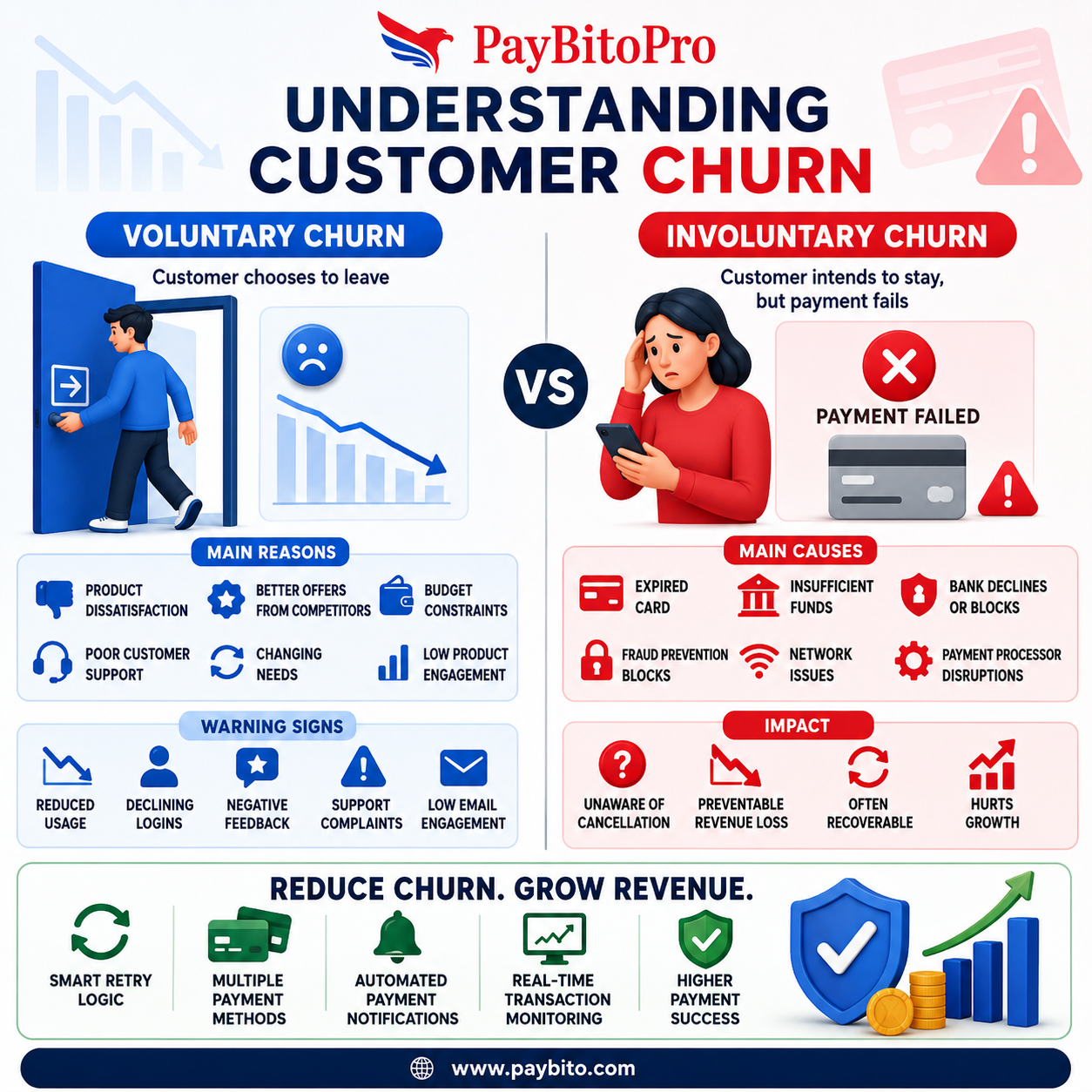
Increased Customer Churn
Customers may switch to competitors with smoother payment experiences.
This makes it critical for businesses to prioritize strategies to reduce payment declines.
Proven Strategies to Reduce Payment Declines
Let’s explore the most effective ways to reduce payment declines and optimize payment performance.
1. Implement Smart Payment Routing
Smart routing is one of the most effective ways to prevent payment declines.
How It Works
Transactions are routed through multiple processors to find the best approval path.
Benefits
-
Higher approval rates
-
Lower dependency on a single provider
-
Improved transaction success
2. Use Multiple Payment Gateways
Relying on one provider increases risk.
Using multiple gateways helps reduce payment declines by:
-
Providing redundancy
-
Increasing approval chances
-
Ensuring uninterrupted processing
3. Localize Payment Processing
Cross-border transactions often face higher rejection rates.
Localized processing helps reduce payment declines by:
-
Processing transactions closer to the customer’s bank
-
Supporting local currencies
-
Increasing trust
4. Optimize Fraud Detection Systems
Overly strict fraud filters can block legitimate transactions.
Balancing security and user experience is key to reduce payment declines.
Best Practices
-
Use AI-driven fraud detection
-
Adjust risk thresholds
-
Monitor false positives
5. Enable Smart Retry Logic
Failed payments can often be recovered.
Retry mechanisms are essential to prevent payment declines.
Strategies
-
Retry at optimal times
-
Use different payment processors
-
Offer alternative payment methods
6. Offer Multiple Payment Options
Providing more payment methods helps reduce payment declines.
Options
-
Credit and debit cards
-
Digital wallets
-
Bank transfers
-
Cryptocurrency payments
This increases the likelihood of successful transactions.
7. Improve Checkout Experience
A complicated checkout process increases errors.
Simplifying checkout helps prevent payment declines.
Tips
-
Minimize form fields
-
Enable auto-fill
-
Provide real-time validation
8. Work with High-Risk Payment Providers
Businesses in regulated industries should partner with specialized providers.
This ensures access to tailored solutions to reduce payment declines.
Role of Unified Payment Gateways in Reducing Declines
Unified payment gateways are revolutionizing how businesses prevent payment declines.
A unified gateway integrates multiple processors into one system, offering:
Smart Routing
Automatically selects the best processor for each transaction.
Higher Approval Rates
Multiple processors increase success rates.
Global Payment Support
Handles multi-currency and cross-border transactions.
Reduced Downtime
Backup systems ensure continuous processing.
This makes unified platforms one of the most effective tools to reduce payment declines.
How PayBito Helps Reduce Payment Declines?
PayBito offers a powerful unified payment infrastructure designed to help businesses reduce payment declines.
Intelligent Payment Routing
Optimizes transaction paths for higher approval rates.
Multi-Gateway Integration
Connects multiple processors for redundancy.
Global Payment Capabilities
Supports cross-border transactions seamlessly.
Advanced Fraud Detection
Reduces false declines while preventing fraud.
Crypto Payment Support
Provides alternative payment options to improve success rates.
Scalable Infrastructure
Supports growing businesses without interruptions.
Benefits of Reducing Payment Declines
Implementing strategies to reduce payment declines offers several advantages.
Increased Revenue
Higher approval rates lead to more completed transactions.
Better Customer Experience
Smooth payments improve customer satisfaction.
Higher Conversion Rates
Reduced declines increase checkout success.
Global Expansion
Improved processing enables international growth.
Competitive Advantage
Businesses with optimized payments outperform competitors.
Future Trends in Payment Optimization
The future of payment optimization focuses on helping businesses reduce payment declines.
AI-Driven Payment Intelligence
Machine learning improves transaction success rates.
Real-Time Analytics
Provides insights into decline patterns.
Growth of Alternative Payments
Crypto and digital wallets reduce reliance on cards.
Unified Payment Ecosystems
Integrated platforms simplify payment management.
Businesses adopting these trends early will stay ahead.
Conclusion:
Payment declines are a major challenge for businesses, but they are not unavoidable.
By implementing the right strategies to reduce payment declines, businesses can:
-
Improve transaction success rates
-
Enhance customer experience
-
Increase revenue
-
Expand globally
-
Optimize payment performance
Unified payment gateways like PayBito provide the tools needed to achieve these goals.
For businesses looking to scale in today’s competitive market, the ability to reduce payment declines is not just an optimization—it’s a necessity.



No Comment