


Real estate is often associated with high transaction values, concentrated ownership structures, and relatively large investment sizes. A commercial office building, apartment complex, industrial facility, or hospitality asset may require substantial capital, making direct ownership impractical for many investors. This is one reason why real estate tokenization is frequently discussed alongside fractional ownership.
Tokenization can create a digital representation of defined interests associated with a property or a property-holding structure and divide those interests into smaller units. However, it is important to understand exactly what is being fractionalized, what investors may receive, and where the limits of fractional ownership begin.
Fractionalization is not simply about splitting a building into digital pieces. It is a process that combines legal structures, investor rights, and digital infrastructure to represent defined interests in a more divisible format.
What Is Fractional Ownership in Real Estate?
Fractional ownership refers to a structure in which multiple investors hold defined interests associated with the same real estate asset.
This idea existed long before digital assets. Real estate funds, investment partnerships, trusts, and other structures have allowed multiple participants to invest in a single property for decades. Tokenization introduces a digital layer to these models. Instead of managing investor participation entirely through conventional records and documentation, digital tokens can represent defined interests associated with the underlying structure. The result is not necessarily a new form of ownership, but a different way to represent, administer, and transfer eligible interests.
This distinction is important because a token does not automatically equal direct ownership of a physical property. What the token represents depends on the legal and contractual framework established for the transaction.
What Is Actually Being Fractionalized?
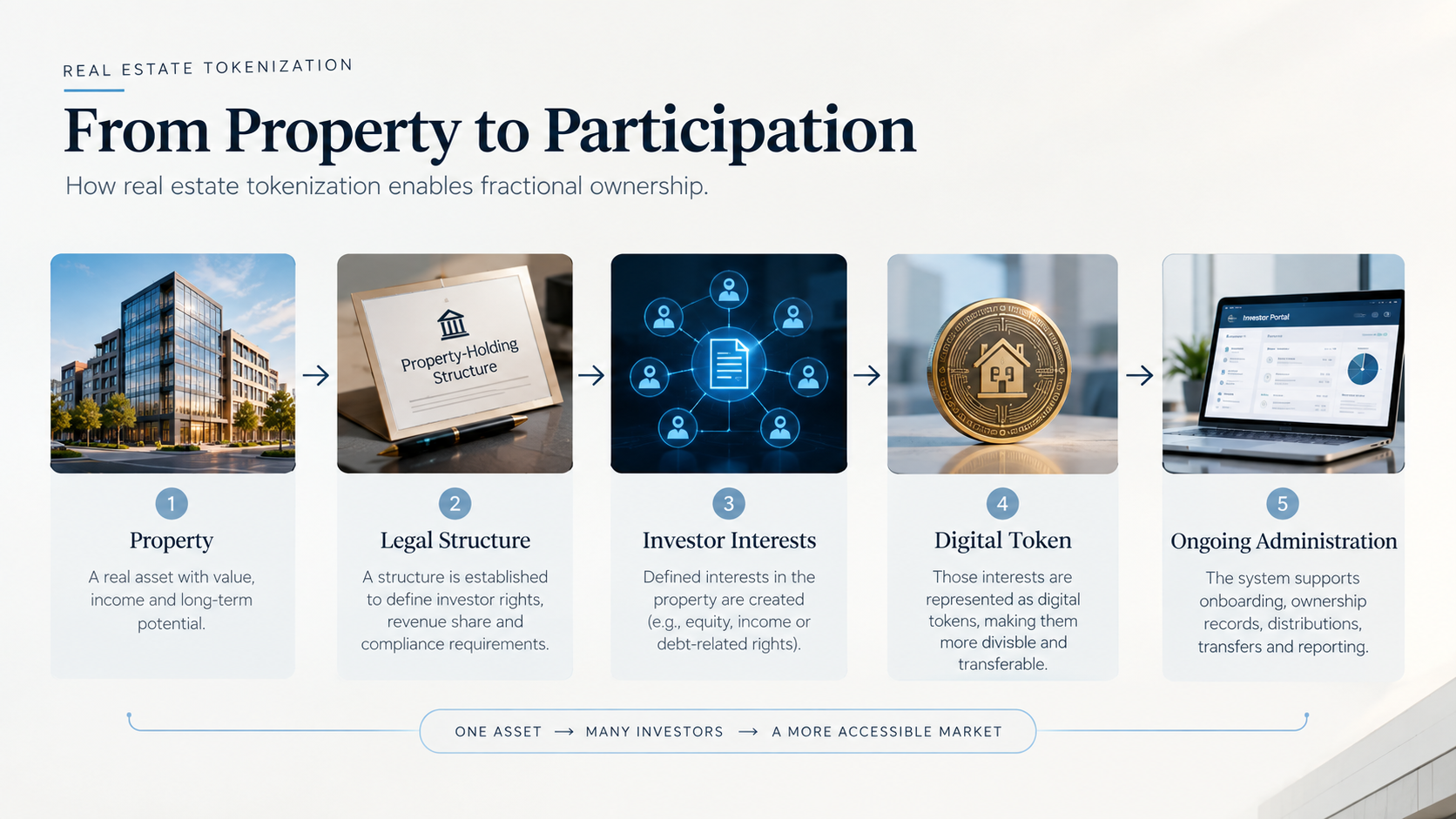
When people discuss fractional real estate, they often assume that a building itself is being divided into digital pieces. In practice, the process is usually more structured. A simplified model looks like this:
Property
↓
Property-Holding Structure
↓
Defined Investor Interests
↓
Digital Token Representation
The property remains a physical asset with its own ownership records, leases, financing arrangements, and operational requirements. A legal structure is established around the property, and investor rights are defined within that framework. The digital tokens are then associated with those defined interests. This means the fractionalization process may apply to:
- interests in a property-holding entity
- beneficial or economic interests
- defined contractual rights
- debt-related interests
- other legally established entitlements
The exact model depends on the transaction structure, jurisdiction, and applicable requirements.
A Real-World Example
Consider a commercial office property valued at $20 million. Traditionally, ownership might be concentrated among a small number of investors because of the capital required to participate.
Suppose an appropriate legal structure is created around the property, and defined investor interests are represented digitally through 200,000 tokens. An eligible investor acquiring 2,000 tokens would hold a defined interest according to the governing agreements.
The important point is that the investor’s rights come from the legal and contractual structure, not from the token alone.
The token acts as a digital representation of those rights within the broader system. This approach can create more flexibility in how interests are represented and managed without changing the physical nature of the underlying property.
Why Is Real Estate Well Suited to Fractionalization?
Real estate has several characteristics that make it a common candidate for fractional structures.
-
High Asset Values
Many commercial properties involve significant capital commitments. Fractional structures can represent smaller interests within larger assets.
-
Defined Cash Flows
Rental income, lease payments, and other property-related cash flows can create clearly identifiable investor entitlements, depending on the structure.
-
Established Ownership Models
Real estate already uses partnerships, funds, trusts, and other multi-investor structures. Tokenization can provide a digital layer to these familiar arrangements.
-
Long-Term Asset Management
Properties require ongoing administration, investor records, reporting, and servicing. Digital infrastructure may support parts of these operational processes.
These characteristics help explain why real estate is frequently discussed within the broader context of real-world asset tokenization.
Does Fractionalization Automatically Create Liquidity?
No.
This is one of the most important distinctions in discussions about tokenized real estate. Fractionalization means that defined interests can be represented in smaller units. Liquidity refers to the ability to buy or sell those interests efficiently. The two concepts are related, but they are not the same. Whether a fractional interest can be transferred depends on factors such as:
- investor demand
- transfer restrictions
- market infrastructure
- regulatory considerations
- availability of authorized participants
- secondary-market access
For example, a tokenized property may have 200,000 digital units, but that does not automatically mean there is an active market for those units. Tokenization can support transferability under the appropriate framework, but liquidity depends on broader market conditions. This distinction is especially important for institutional participants evaluating real estate tokenization structures.
How Are Fractional Interests Managed?
Once interests are represented digitally, the system can support several operational functions. These may include:
- investor onboarding
- allocation of tokenized interests
- ownership records
- permitted transfers
- reporting
- administration of distributions
- ongoing investor management
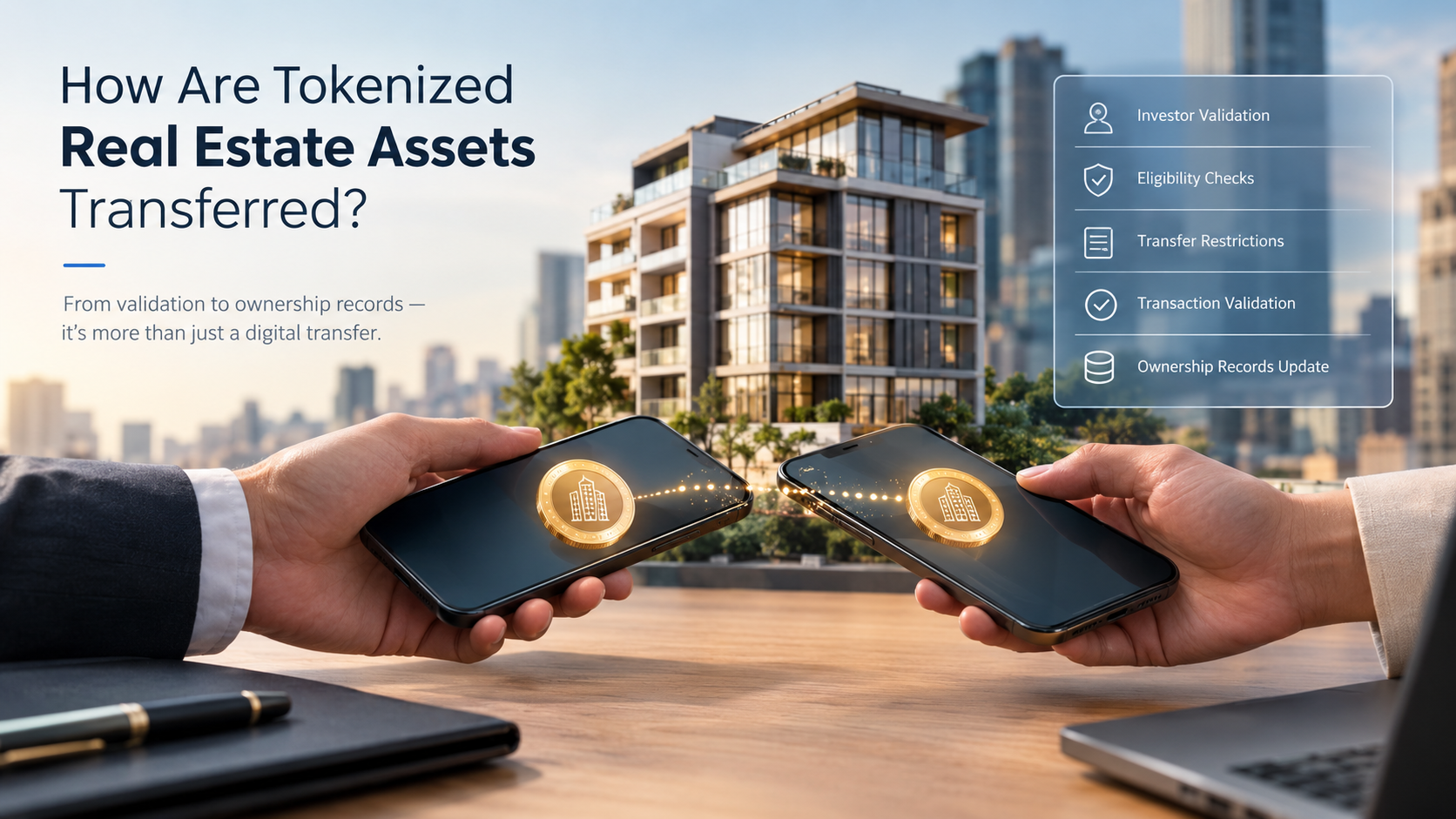
For example, if an investor transfers a permitted portion of their holdings to another eligible participant, the system can update ownership records and maintain an accurate representation of investor interests. Digital infrastructure can therefore support both the issuance and the ongoing administration of fractional interests.
What Are the Challenges of Fractional Real Estate Structures?
Fractionalization creates opportunities for more flexible participation, but it also introduces additional considerations.
-
Legal Structure
The relationship between the property, investor rights, and token representation must be clearly defined.
-
Investor Rights
Economic, governance, transfer, and redemption rights need to be established in the transaction documents.
-
Transfer Restrictions
Not every investor may be eligible to receive or transfer interests.
-
Property Administration
The underlying asset still requires management, valuation, maintenance, and reporting.
-
Record Alignment
Digital records, investor registers, and legal documentation must remain consistent.
These considerations highlight that fractionalization is not solely a technology exercise. It is a combination of legal, financial, operational, and digital processes.
Fractionalization vs Traditional Real Estate Participation
Traditional real estate structures often involve:
- fewer investors
- larger minimum participation sizes
- manual administration
- conventional ownership records
Tokenized structures may introduce:
- smaller digital units
- digital ownership records
- more automated administration processes
- digitally enabled transfers, subject to applicable rules
The underlying real estate asset, however, remains the same. The building still exists off-chain, and investor rights continue to depend on the governing structure.
Conclusion
Real estate tokenization can support fractional ownership by creating digital representations of defined interests associated with a property or a property-holding structure. The process is not about dividing a building into pieces on a blockchain. It is about defining investor rights, establishing an appropriate structure, and representing those interests digitally.
Real estate is particularly suited to fractional models because of its high asset values, established ownership structures, and ongoing cash-flow administration. However, fractionalization should not be confused with liquidity, unrestricted trading, or guaranteed market access. The most useful way to understand tokenized real estate is through a simple framework:
Property → Legal Structure → Investor Interest → Digital Token → Ongoing Administration
Fractionalization becomes one part of that broader system rather than the entire story.

No Comment