

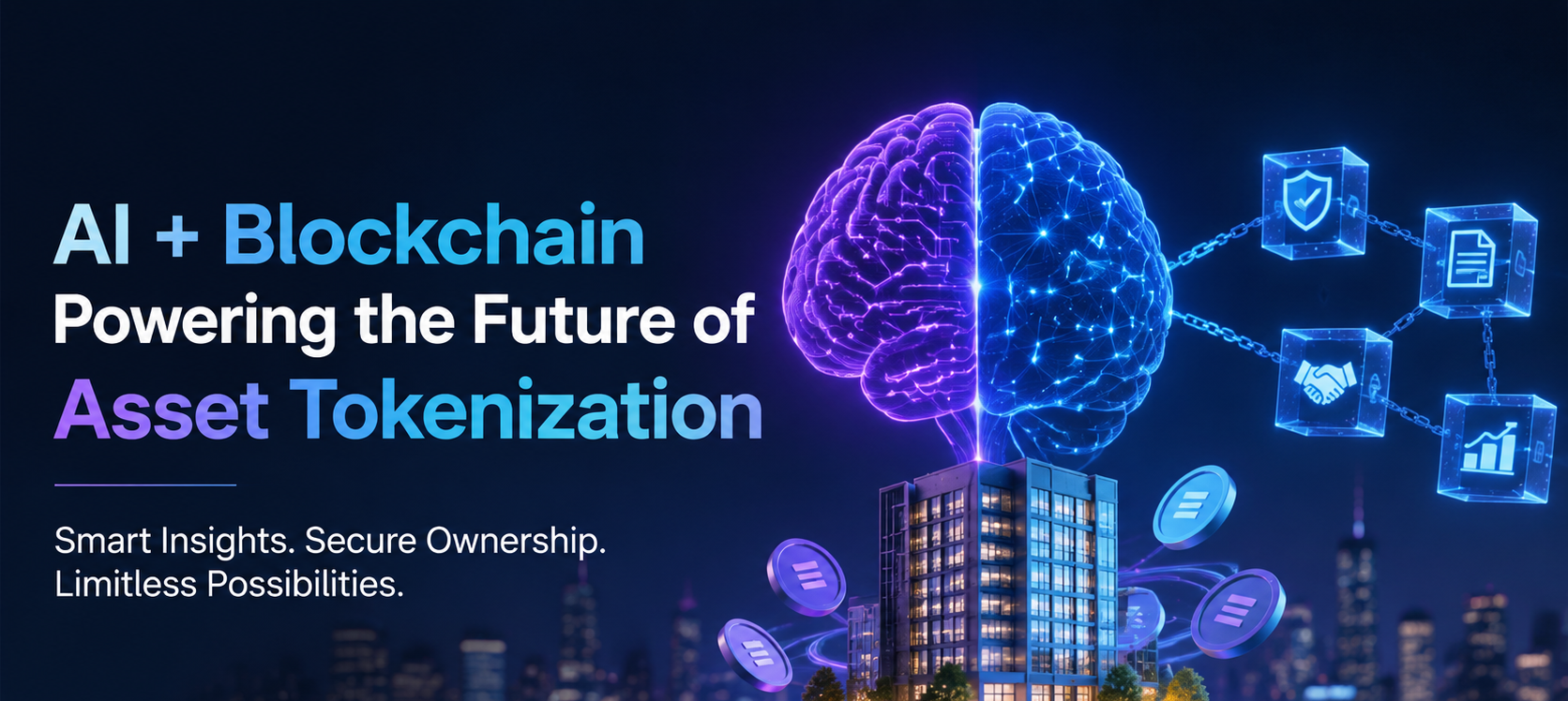
Artificial intelligence (AI) and blockchain are two of the most transformative technologies shaping the future of asset tokenization. While blockchain provides a secure and transparent foundation for creating digital representations of real-world assets, AI enhances these systems with automation, predictive analytics, and intelligent decision-making. Together, they are making tokenized assets more efficient, secure, and scalable across industries.
What Is Asset Tokenization?
Asset tokenization is the process of converting ownership rights of a physical or financial asset into digital tokens stored on a blockchain. These assets can include real estate, commodities, bonds, artwork, or private equity.
For example, instead of selling an entire commercial property, the owner can divide it into thousands of blockchain-based tokens, allowing multiple investors to own fractional shares.
How Blockchain Powers Asset Tokenization
Blockchain acts as the digital infrastructure that records ownership and transactions securely. Every transaction is permanently stored on a decentralized ledger, making records transparent and tamper-resistant.
Key benefits include:
- Secure ownership records
- Transparent transaction history
- Automated settlements through smart contracts
- Improved traceability and auditability
- Reduced reliance on intermediaries
How AI Enhances Tokenization Platforms
While blockchain secures data, AI analyzes it. By processing large volumes of financial and operational information, AI improves the efficiency and intelligence of tokenized asset platforms.
1. Smarter Asset Valuation
AI analyzes market trends, historical prices, economic indicators, and comparable assets to estimate more accurate asset values.
Example: AI can continuously evaluate a tokenized commercial property using rental income, occupancy rates, and local market conditions instead of relying only on periodic manual appraisals.
2. Automated Due Diligence
Tokenizing an asset requires verifying legal documents, ownership records, and financial information. AI speeds up this process by extracting data, identifying inconsistencies, and flagging missing information for review.
3. Predictive Risk Analysis
AI evaluates market conditions, liquidity, and historical performance to identify potential investment risks before they become significant.
For example, AI can assess risks associated with tokenized agricultural assets by analyzing weather patterns, commodity prices, and production trends.
4. Fraud Detection
AI continuously monitors transactions to detect suspicious behavior, unusual trading patterns, or identity fraud. Combined with blockchain’s immutable records, it strengthens the security of tokenized ecosystems.
5. Intelligent Smart Contracts
Smart contracts automatically execute predefined conditions on the blockchain. AI can support these contracts by analyzing external data before execution, improving automation without changing the contract logic.
Why AI and Blockchain Work Together
Although often mentioned together, AI and blockchain perform different roles.
| Blockchain | AI |
| Secures ownership records | Analyzes data |
| Records transactions | Predicts trends |
| Executes smart contracts | Detects fraud |
| Ensures transparency | Supports decision-making |
Blockchain creates trusted data, while AI transforms that data into actionable insights.
Benefits of AI-Powered Asset Tokenization
The combination of AI and blockchain offers several advantages:
- Faster asset verification
- Improved pricing accuracy
- Enhanced fraud detection
- Better investment insights
- Greater operational efficiency
- Smarter portfolio management
- Scalable tokenization processes
Conclusion
AI and blockchain are transforming asset tokenization by combining secure digital ownership with intelligent automation. Blockchain provides transparency, immutability, and trust, while AI improves valuation, risk assessment, fraud detection, and operational efficiency.
As tokenized markets continue to evolve, the integration of AI and blockchain will play a central role in creating more efficient, data-driven, and accessible digital asset ecosystems.

No Comment