

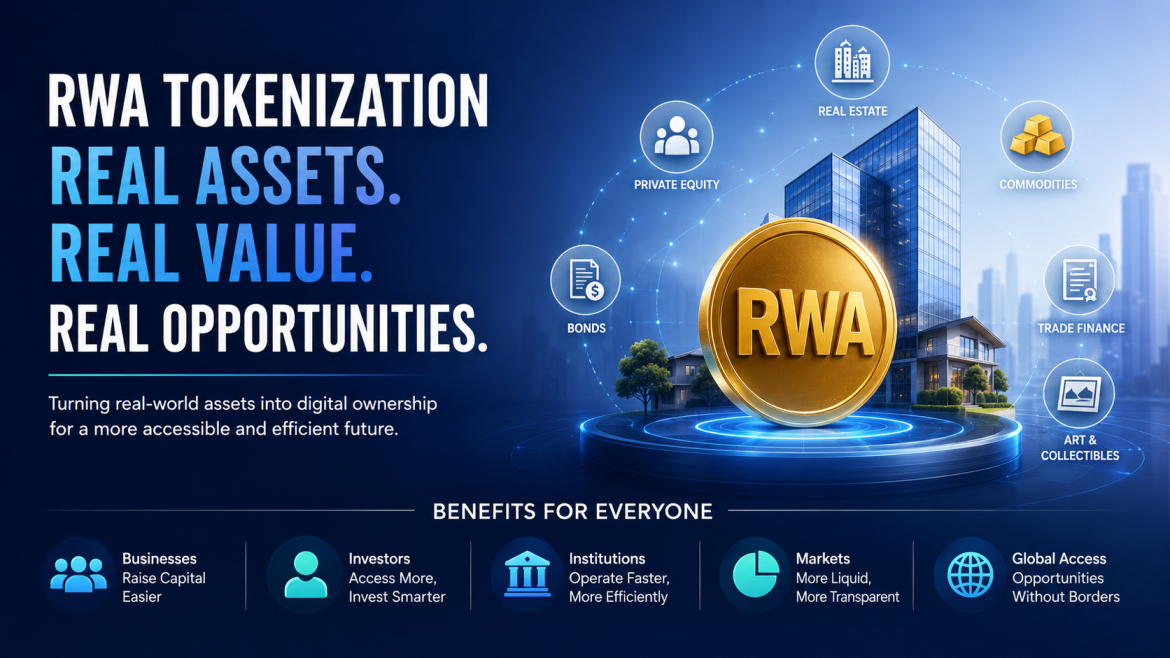
Real-world asset (RWA) tokenization is transforming how physical and financial assets are owned, managed, and traded. By representing ownership of real-world assets as digital tokens on a blockchain, tokenization makes assets more accessible, transparent, and efficient to transact.
While the technology itself is innovative, its real value lies in the practical benefits it offers to different participants in the financial ecosystem. From businesses seeking capital to investors looking for diversification, RWA tokenization creates opportunities that traditional asset management models often struggle to provide.
This article explores who benefits from RWA tokenization and why it is becoming an increasingly important part of the digital economy.
What Is RWA Tokenization?
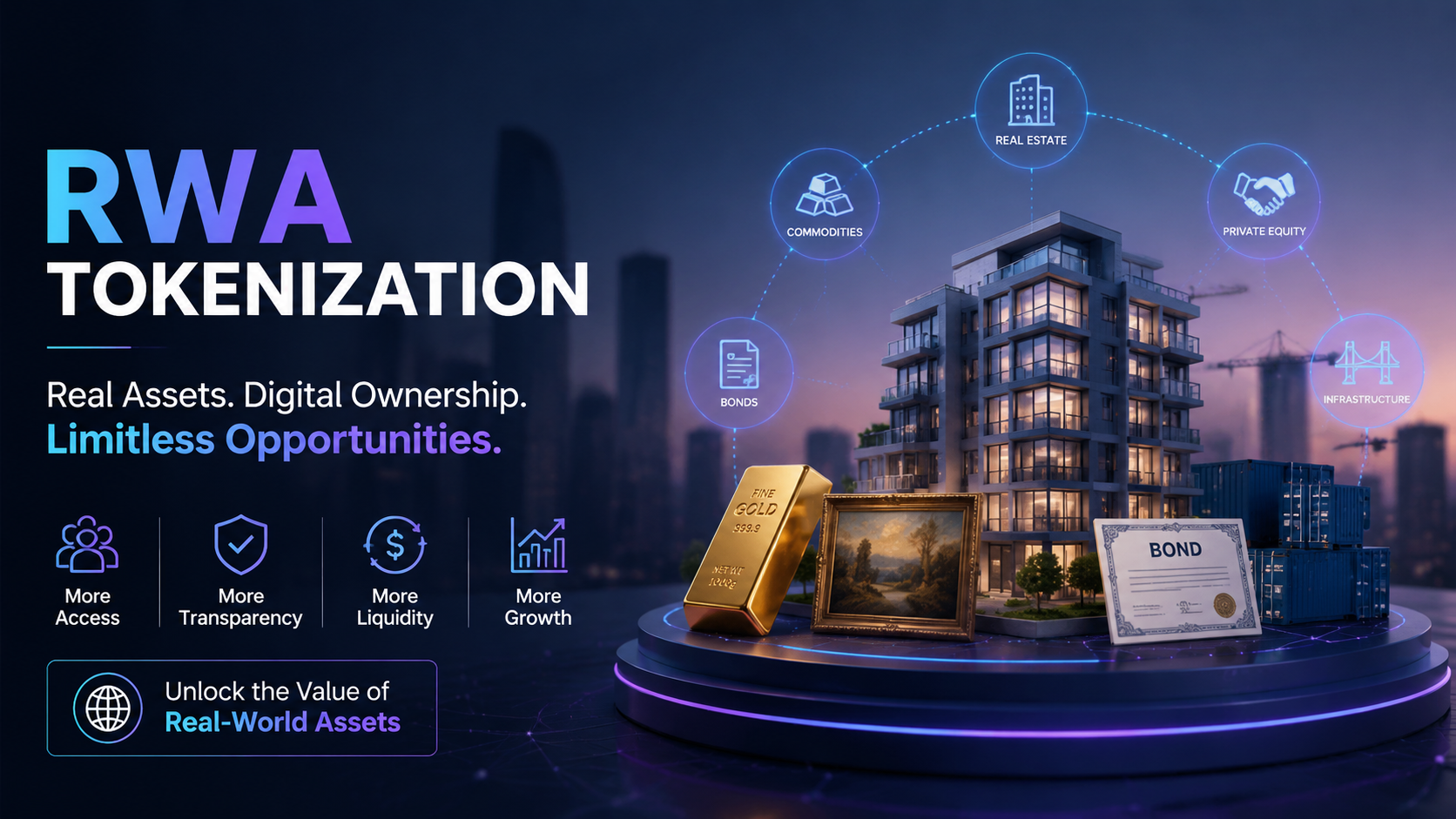
RWA tokenization is the process of converting ownership rights of a real-world asset into blockchain-based digital tokens. These assets can include:
- Real estate
- Commodities such as gold or silver
- Bonds and fixed-income securities
- Private equity
- Fine art and collectibles
- Trade finance assets such as invoices
- Infrastructure projects
Each token represents a fractional or complete ownership interest in the underlying asset, allowing ownership to be recorded and transferred digitally through blockchain technology.
1. Businesses and Asset Owners
Businesses that own valuable assets often face liquidity challenges. Selling an entire property, infrastructure asset, or private investment can be time-consuming and expensive. Tokenization offers an alternative by allowing ownership to be divided into smaller digital units.
For example, imagine a commercial building valued at $20 million. Instead of selling the property outright, the owner can tokenize it into 20 million digital tokens, each representing a small ownership stake. Investors can purchase only the number of tokens they need, while the owner raises capital without completely relinquishing ownership.
For businesses, tokenization can provide:
- Access to a broader pool of investors
- Improved capital-raising opportunities
- Fractional ownership models
- Faster ownership transfers
- Reduced administrative complexity through smart contracts
2. Individual Investors
Traditionally, investing in premium assets such as commercial real estate or private equity required significant capital. RWA tokenization lowers this barrier by enabling fractional ownership.
Instead of purchasing an entire asset, investors can acquire a smaller percentage that aligns with their investment budget.
For example, rather than investing hundreds of thousands of dollars in a commercial property, an investor may purchase tokenized shares worth only a few hundred or a few thousand dollars, depending on the issuer’s structure.
This approach enables investors to:
- Diversify portfolios across multiple asset classes
- Access investments previously available mainly to institutions
- Invest smaller amounts in high-value assets
- Gain exposure to alternative investment opportunities
3. Financial Institutions
Banks, investment firms, and asset managers can also benefit from tokenization by improving operational efficiency.
Many traditional financial processes involve multiple intermediaries, extensive documentation, and lengthy settlement periods. Blockchain technology helps digitize ownership records and automate certain processes through smart contracts.
Potential benefits include:
- Faster settlement of transactions
- Improved transparency in ownership records
- Reduced reconciliation efforts
- More efficient asset servicing
- Enhanced record accuracy through immutable blockchain ledgers
These efficiencies can help financial institutions modernize asset management workflows while reducing operational overhead.
4. Real Estate Industry
Real estate remains one of the most widely discussed applications of RWA tokenization because properties are typically expensive, relatively illiquid, and involve complex ownership transfers.
Tokenization enables properties to be divided into smaller ownership units that can potentially be traded more efficiently than traditional real estate transactions.
For developers, this creates additional fundraising opportunities. For investors, it provides access to property markets without requiring the purchase of an entire building.
Consider a residential apartment complex. Instead of selling individual apartments or the entire property, the developer can tokenize the project, allowing multiple investors to collectively own portions of the asset.
5. Small and Medium-Sized Enterprises (SMEs)
Many SMEs possess valuable assets but face difficulties securing financing due to limited collateral or restricted access to traditional lending channels.
Tokenization offers an alternative way to unlock the value of existing assets by representing them digitally for qualified investors or financing structures.
Examples include:
- Trade invoices
- Equipment
- Warehousing assets
- Commercial inventory
- Revenue-generating infrastructure
Although regulatory requirements vary across jurisdictions, tokenization has the potential to expand financing options for businesses that might otherwise face capital constraints.
6. Global Investors
Cross-border investing often involves multiple intermediaries, currency conversions, legal processes, and settlement delays. Blockchain-based tokenization enables digital ownership records that can simplify many aspects of international investing, subject to applicable regulations.
This creates opportunities for investors to access diversified assets across different countries while allowing asset issuers to reach a broader global audience. Although legal and regulatory compliance remains essential, tokenization has the potential to make international investment participation more efficient.
Challenges to Consider
Despite its advantages, RWA tokenization is still an evolving market.
Organizations considering tokenization should carefully evaluate:
- Regulatory compliance requirements
- Asset valuation methodologies
- Custody and asset security
- Smart contract reliability
- Investor protection measures
- Secondary market liquidity
Addressing these factors is essential for building trust and ensuring long-term adoption.
Who Benefits the Most?
The impact of RWA tokenization extends across multiple stakeholders, each benefiting in different ways.
|
Stakeholder |
Primary Benefit |
|
Businesses |
Raise capital while retaining greater flexibility over asset ownership. |
|
Investors |
Access fractional ownership and diversify into high-value assets. |
|
Financial Institutions |
Improve operational efficiency and streamline asset management processes. |
|
Real Estate Companies |
Unlock liquidity and broaden investment participation. |
|
SMEs |
Explore alternative financing opportunities using tokenized assets. |
|
Global Investors |
Access investment opportunities across markets through digital ownership models. |
Final Thoughts
Real-world asset tokenization is reshaping how assets are financed, owned, and transferred by combining traditional investments with blockchain technology. Rather than benefiting a single group, it creates value across the financial ecosystem—from businesses seeking new funding models to investors looking for broader market access.
As blockchain infrastructure, regulatory frameworks, and digital asset markets continue to evolve, RWA tokenization is expected to play an increasingly important role in improving liquidity, expanding investment accessibility, and modernizing the management of real-world assets.

No Comment