

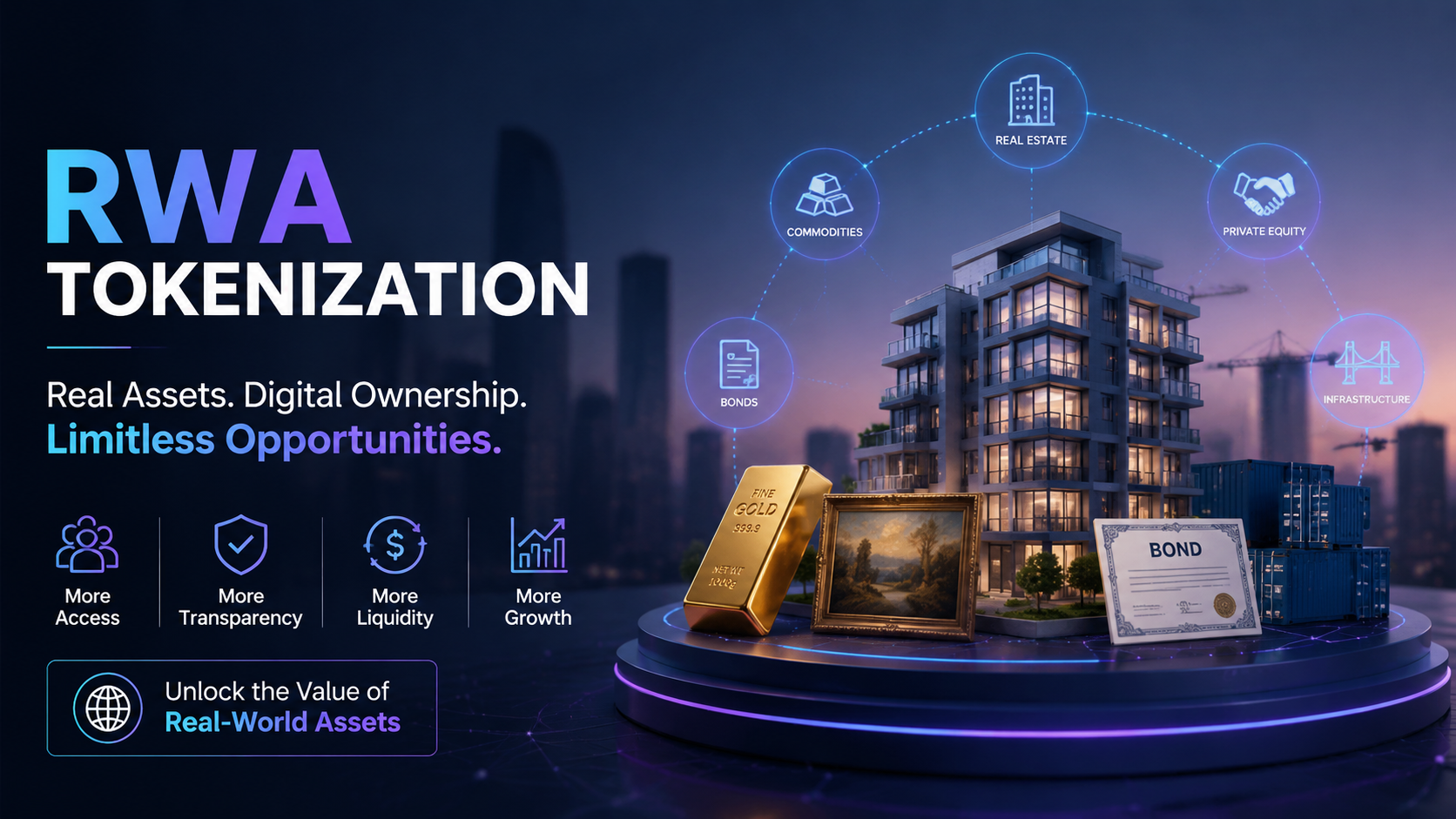
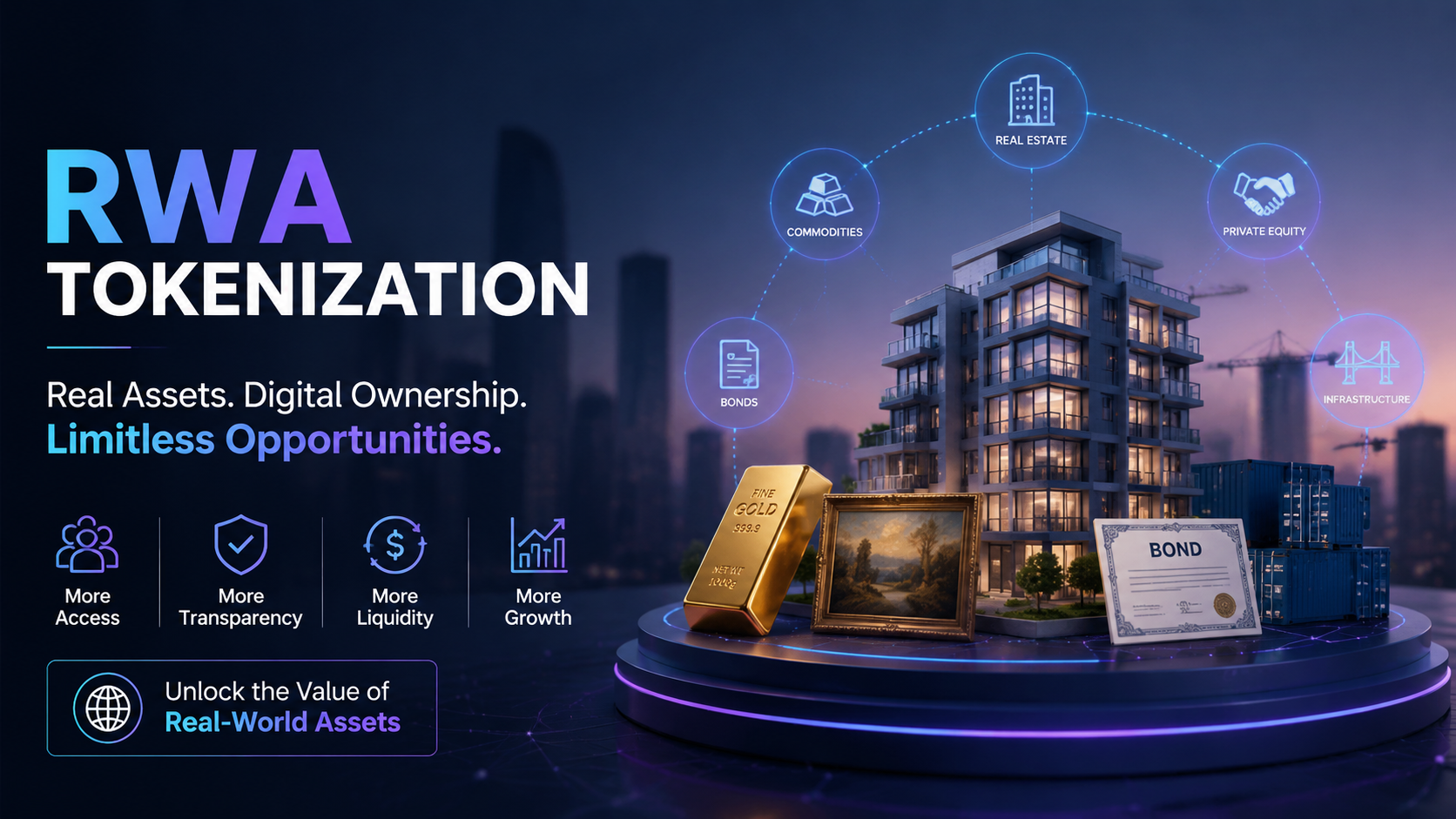
Real-world asset (RWA) tokenization is reshaping how physical and financial assets are owned, traded, and managed. By representing ownership rights as blockchain-based digital tokens, tokenization introduces a different approach to investment and asset administration. Traditional asset management, in contrast, has relied for decades on centralized institutions, intermediaries, and established financial infrastructure.
Although both systems aim to help investors access and manage assets, they differ significantly in ownership structure, transaction processes, transparency, and accessibility. Understanding these differences is essential for evaluating how digital asset markets are evolving.
What Is Traditional Asset Management?
Traditional asset management involves acquiring, managing, and transferring investments through regulated financial institutions. Assets may include real estate, stocks, bonds, commodities, private equity, or infrastructure investments. Ownership records are typically maintained by custodians, registrars, banks, or government authorities.
Transactions usually require multiple intermediaries, including brokers, settlement agencies, legal representatives, and financial institutions. These parties verify ownership, execute transfers, maintain records, and ensure regulatory compliance.
For example, purchasing shares of a company generally involves a brokerage platform, an exchange, a clearing corporation, and a custodian before ownership is finalized.
What Is RWA Tokenization?
RWA tokenization converts ownership rights of physical or financial assets into digital tokens recorded on a blockchain. Each token represents a defined portion of an underlying asset and can be transferred digitally while maintaining an immutable ownership record.
The underlying asset remains the same – a building remains a building, and a government bond remains a government bond – but the method of representing and transferring ownership changes.
For example, instead of selling an entire commercial property to a single investor, the property can be divided into thousands of blockchain-based tokens, allowing multiple investors to own proportional shares.
Ownership Structure
One of the most noticeable differences lies in how ownership is represented.
Traditional asset management records ownership through centralized databases maintained by financial institutions or government registries. Updating ownership often requires administrative verification and documentation.
Tokenized assets record ownership directly on a blockchain ledger. Each transfer updates the ownership record automatically, creating a permanent transaction history that participants can verify. This digital ownership model reduces dependence on maintaining multiple independent records across different organizations.
Liquidity
Liquidity refers to how easily an asset can be bought or sold without significantly affecting its value.
Many traditional assets are relatively illiquid. Real estate, private equity investments, and infrastructure projects often require lengthy negotiations, legal documentation, valuations, and settlement procedures before ownership changes hands.
Tokenization can improve liquidity by allowing assets to be divided into smaller ownership units. Instead of selling an entire asset, investors may transfer only a portion of their ownership.
For example, an office building valued at $20 million could be represented by 20 million tokens. An investor holding 50,000 tokens can transfer only those tokens rather than selling an entire ownership stake through conventional property transactions.
While liquidity ultimately depends on market demand, tokenization creates the technical capability for more flexible trading.
Fractional Ownership
Traditional asset management often requires substantial capital to acquire certain investments.
Commercial real estate, private equity funds, or infrastructure projects frequently have high minimum investment requirements that limit participation to institutions or wealthy investors.
Tokenization enables fractional ownership by dividing an asset into many digital units. Investors can purchase smaller portions rather than acquiring the entire asset.
For example, instead of investing $1 million into a private property fund, an investor may purchase a much smaller tokenized share representing a fraction of the same asset.
Fractional ownership broadens investment participation without changing the underlying asset itself.
Transaction Efficiency
Traditional asset transfers often involve multiple administrative steps, including document verification, legal review, settlement procedures, and payment processing. These processes may take several business days or longer depending on the asset class.
Blockchain-based token transfers occur through distributed ledger technology, where ownership updates are recorded digitally after network validation.
Because ownership records exist on a shared ledger, participants reference a single source of truth instead of reconciling multiple independent databases.
This can simplify operational workflows, although legal and regulatory requirements continue to apply to many tokenized assets.
Transparency
Transparency differs considerably between the two systems.
Traditional markets generally provide investors with account statements, regulatory filings, and reports generated by financial institutions. However, complete ownership histories are often accessible only to authorized organizations.
Blockchain networks maintain immutable transaction records that participants can independently verify. Every ownership transfer is permanently recorded, making historical transaction data easier to audit.
This does not necessarily reveal investor identities on public blockchains, but it does provide greater visibility into transaction history compared to many conventional systems.
Settlement Process
Settlement refers to the final transfer of ownership after a transaction.
Traditional settlement often requires coordination between exchanges, brokers, clearinghouses, custodians, and banks. Depending on the asset, settlement may take several days.
Tokenized assets can enable faster settlement because ownership transfers occur directly on the blockchain after transaction validation.
Reducing the number of reconciliation steps may decrease operational complexity while maintaining an auditable ownership record.
Cost Structure
Traditional asset management includes operational expenses associated with intermediaries, administrative processing, documentation, custody, and settlement.
Tokenization can automate certain processes through blockchain infrastructure and smart contracts, reducing manual administrative activities for specific transaction types.
However, costs still exist, including blockchain network fees, legal compliance, custody solutions, and asset servicing. Tokenization changes where costs occur rather than eliminating them entirely.
Accessibility
Traditional investment markets frequently impose geographic restrictions, business-hour limitations, and varying eligibility requirements depending on jurisdiction.
Blockchain networks operate continuously, allowing token transfers without dependence on conventional market operating hours.
Additionally, digital ownership structures may simplify participation for investors who meet applicable regulatory requirements, although access ultimately depends on the legal framework governing each tokenized asset.
A Comparative Summary
| Feature | Traditional Asset Management | RWA Tokenization |
| Ownership Records | Centralized registries | Blockchain ledger |
| Asset Division | Limited | Fractional ownership |
| Liquidity | Often lower for private assets | Potentially higher through tokenized units |
| Settlement | Multi-step process | Blockchain-based transfer |
| Transparency | Institution-controlled records | Immutable transaction history |
| Intermediaries | Multiple parties involved | Fewer operational intermediaries for transfers |
| Accessibility | Often limited by capital requirements | Smaller investment units may improve access |
Conclusion
Traditional asset management has provided the foundation for global investing for decades, offering established regulatory structures and institutional oversight. RWA tokenization introduces a new method of representing ownership that emphasizes digital records, fractional participation, blockchain-based transfers, and increased transparency.
Rather than replacing traditional asset management outright, tokenization changes how ownership is recorded, transferred, and managed. As blockchain technology continues to mature, understanding the distinctions between these two approaches helps investors, financial institutions, and businesses evaluate where tokenized assets fit within the broader investment landscape.

No Comment