

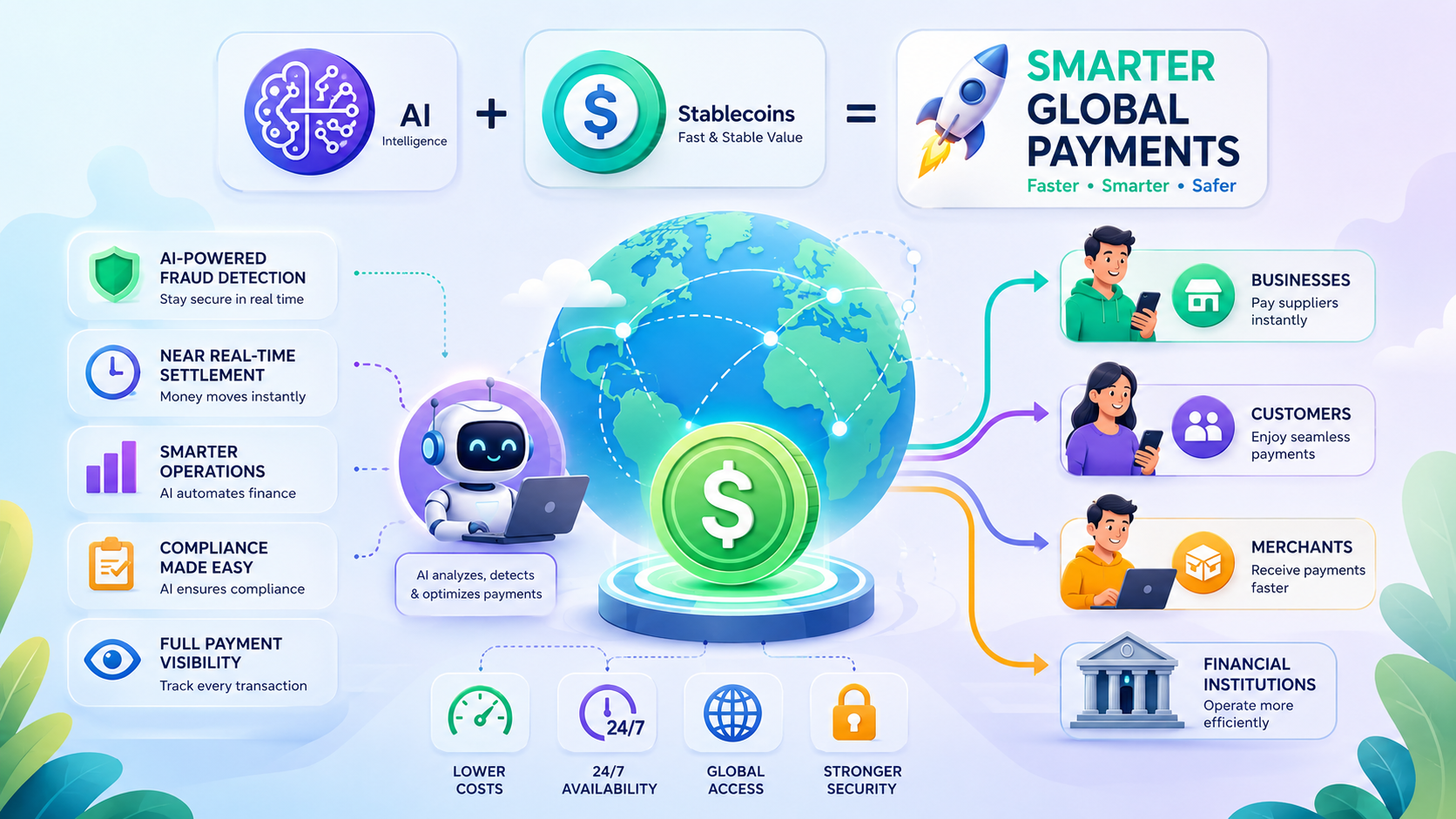
The way money moves across the world has changed dramatically over the past decade. Online banking, digital wallets, and instant payment systems have already reduced the need for cash in many places. But another transformation is beginning to take shape. Artificial intelligence (AI) and stablecoins are coming together to create faster, smarter, and more efficient payment systems that could reshape global commerce.
While these technologies are often discussed separately, their combined potential is far more interesting. Stablecoins make digital payments faster and more predictable, while AI helps businesses automate decisions, detect risks, and improve customer experiences. Together, they are building the foundation for the next generation of global payments.
Understanding the Two Technologies
A stablecoin is a digital asset designed to maintain a relatively stable value by being linked to an external asset, such as a national currency. Unlike many cryptocurrencies that experience significant price swings, stablecoins aim to provide consistency, making them more practical for everyday payments.
Artificial intelligence, on the other hand, allows computers to analyze large amounts of data, recognize patterns, and make decisions or recommendations with minimal human involvement. In payments, AI is already helping detect fraud, automate customer support, and optimize financial operations.
When these two technologies work together, payments become not only faster but also much smarter.
Why Traditional Cross-Border Payments Still Face Challenges
Sending money internationally is often more complicated than many people realize. A payment may pass through several financial institutions before reaching its destination. Each step can introduce delays, additional costs, and opportunities for errors.
For businesses operating across multiple countries, these delays can affect cash flow, supplier relationships, and overall efficiency.
Some common challenges include:
- Long settlement times, sometimes taking several business days.
- High transaction fees due to multiple intermediaries.
- Limited payment visibility during processing.
- Different operating hours across financial institutions.
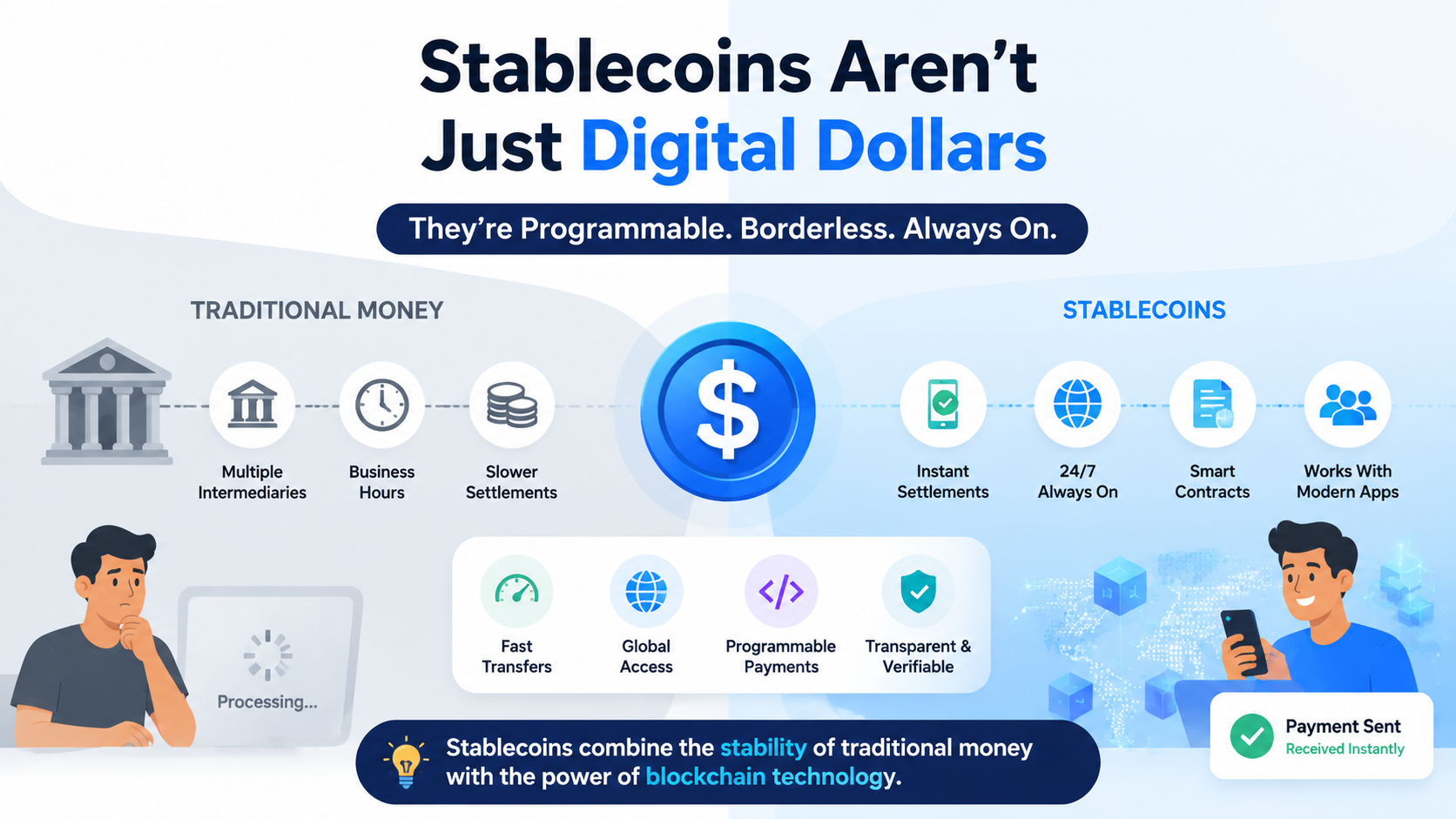
Stablecoins help reduce many of these challenges by enabling transactions to settle much faster on blockchain networks. However, moving money quickly is only part of the solution. Managing those payments intelligently is where AI becomes valuable.
How AI Makes Stablecoin Payments Smarter
Imagine an international retailer that receives thousands of payments every hour from customers around the world. Processing each transaction manually would be impossible.
AI can automatically:
- Detect suspicious payment activity before funds are released.
- Categorize incoming transactions for accounting.
- Predict unusual spending patterns.
- Route payments through the most efficient settlement path.
- Generate compliance alerts when necessary.
At the same time, stablecoins provide the digital payment rail that allows these transactions to move almost instantly. Instead of simply processing payments faster, businesses gain an intelligent payment system that continuously learns and improves.
Better Fraud Detection Without Slowing Payments
One of the biggest concerns in digital payments is FRAUD. Criminals constantly develop new methods to steal funds or exploit weaknesses in payment systems.
Traditional fraud detection often relies on fixed rules. For example, transactions above a certain amount or from unfamiliar locations may automatically be flagged. While effective in some cases, rule-based systems frequently generate false alarms that delay legitimate payments.
AI improves this process by analyzing thousands of variables simultaneously. Rather than relying on a few predefined rules, it studies user behavior over time and identifies unusual patterns that humans might overlook.
For example, if a business normally sends payments during office hours but suddenly initiates several high-value transfers late at night from a different location, AI can recognize the unusual behavior and request additional verification before the payment proceeds.
This approach improves security without creating unnecessary delays for most users.
Smarter Financial Operations for Businesses
Global businesses often manage payments across multiple countries, currencies, suppliers, and customers. Keeping track of these transactions requires significant time and resources.
AI can simplify many routine financial tasks by automatically matching incoming payments with invoices, forecasting future cash requirements, and identifying payment trends.
Combined with stablecoins, businesses gain additional advantages:
|
Traditional Payment Operations |
AI + Stablecoin Operations |
|
Manual reconciliation |
Automated transaction matching |
|
Delayed settlements |
Near real-time settlement |
|
Limited payment visibility |
Continuous transaction monitoring |
|
Static fraud rules |
Adaptive AI-driven risk analysis |
| Slower reporting |
Real-time financial insights |
This allows finance teams to spend less time on repetitive administrative work and more time making strategic decisions.
AI-Powered Compliance
International payments must comply with various financial regulations designed to prevent fraud, money laundering, and illegal financing. Compliance reviews can be time-consuming, particularly when transaction volumes are high.
AI can review payment data continuously, identify transactions requiring additional review, and detect unusual relationships between accounts. Stablecoins also create transparent transaction records on blockchain networks, making it easier for authorized parties to verify payment histories when appropriate.
Organizations such as the Financial Action Task Force provide international guidance on combating financial crime. Their recommendations increasingly discuss digital assets alongside traditional financial systems.
The Rise of Autonomous Payments
Perhaps the most exciting development is the possibility of AUTONOMOUS PAYMENTS.
Instead of people initiating every payment manually, AI systems may eventually handle routine financial decisions within predefined rules.
For example:
- A warehouse automatically pays suppliers when inventory reaches a certain level.
- A shipping system releases payment immediately after delivery is verified.
- A subscription platform processes refunds automatically if service quality falls below agreed standards.
Stablecoins make these automated transactions practical because settlement happens quickly and can operate around the clock. Human oversight will remain essential, but AI can significantly reduce repetitive financial tasks.
Challenges That Still Need Attention
Despite the opportunities, combining AI and stablecoins also introduces important challenges. AI systems require high-quality data to make accurate decisions. Poor data can produce incorrect recommendations or increase false fraud alerts.
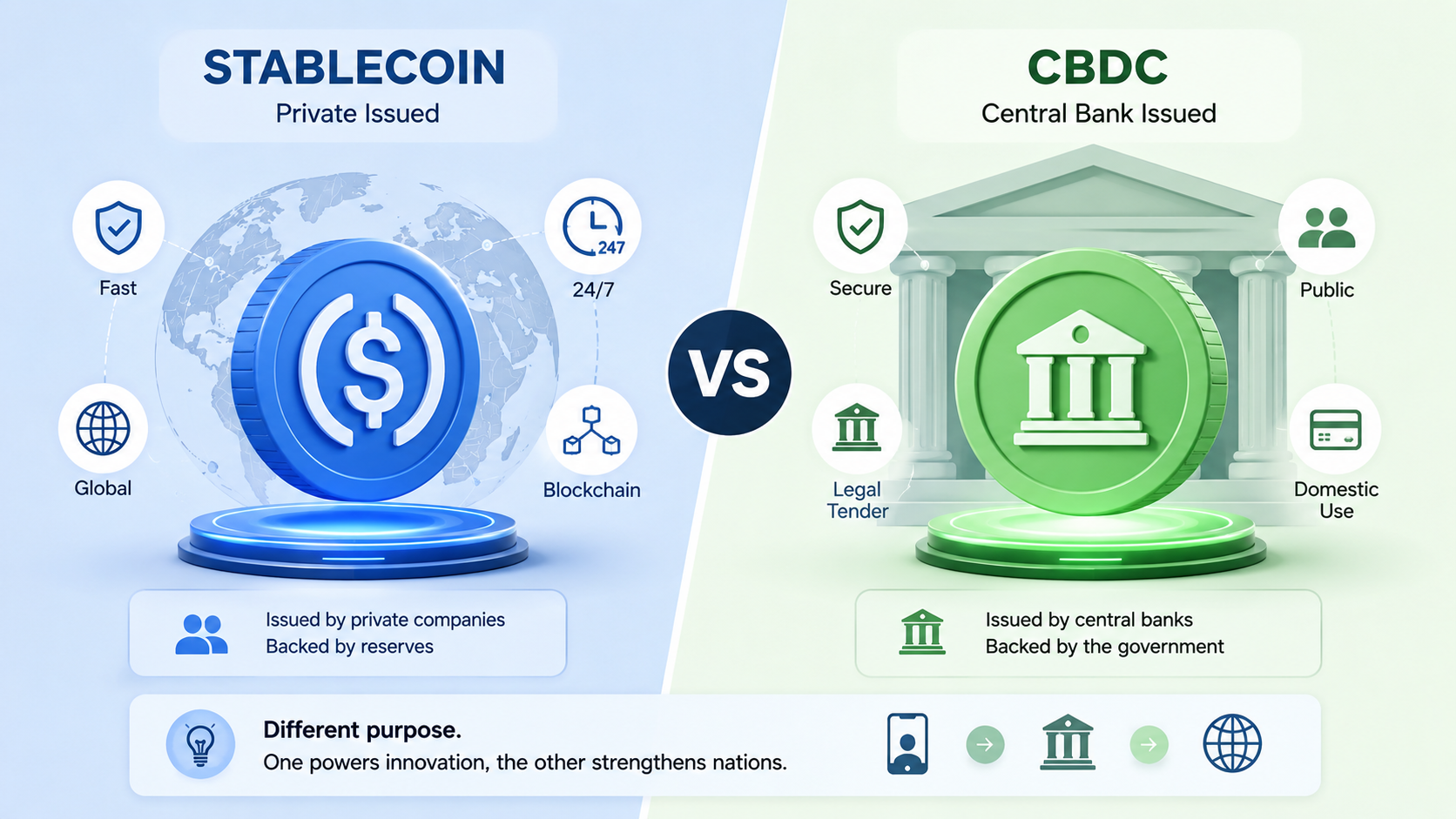
Stablecoin regulations also continue to evolve in many countries. Businesses adopting these technologies must stay informed about changing legal and compliance requirements. Organizations like the Bank for International Settlements regularly publish research on digital payments, central bank digital currencies, and stablecoins that helps explain these developments.
Cybersecurity, privacy, and responsible AI governance will also remain critical as payment systems become increasingly automated.
Final Thoughts
The future of payments is not simply about moving money faster. It is about making payment systems more intelligent, secure, and efficient.
Stablecoins provide the infrastructure for fast digital value transfer, while AI brings automation, analysis, and smarter decision-making. Together, they have the potential to reduce costs, improve fraud detection, simplify financial operations, and support global commerce in ways that were difficult to imagine only a few years ago.
The next generation of global payments will likely rely on both technologies working together. As regulations mature and adoption grows, businesses and consumers may experience payment systems that are not only faster but also capable of making better decisions in real time. The result is a financial ecosystem where money moves more efficiently, risks are identified earlier, and global transactions become simpler for everyone involved.

No Comment