

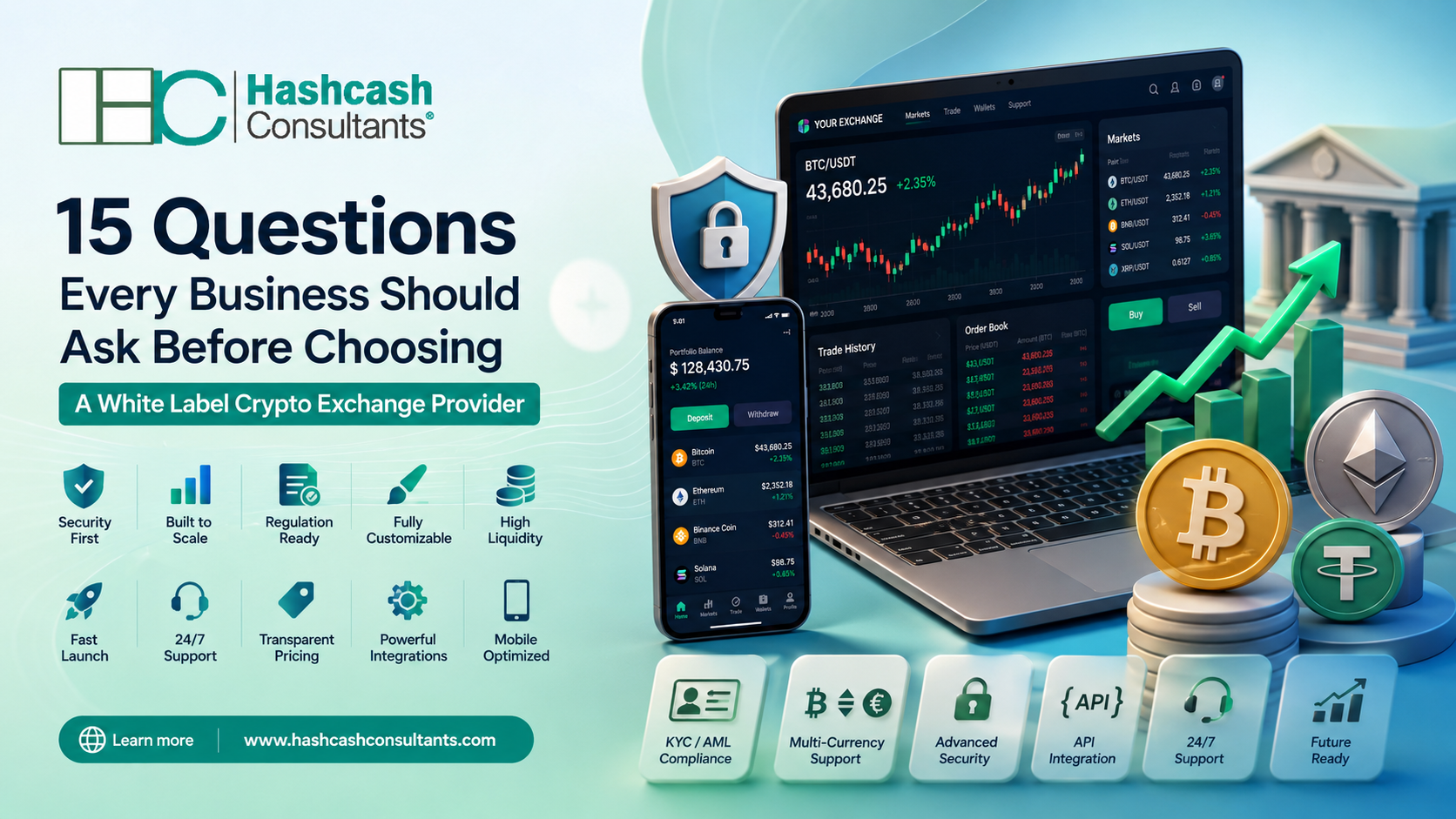
Launching a crypto exchange has never been easier. With a white label solution, businesses can enter the market quickly without spending months building software from scratch. However, choosing the wrong provider can lead to security issues, hidden costs, poor user experience, and expensive upgrades later.
Before signing any agreement, it is worth taking the time to evaluate your options carefully. Reading practical resources on white label crypto exchange development can help you understand what goes into a successful platform before making a decision.
Here are 15 important questions every business should ask before choosing a white label crypto exchange provider.
1. How secure is the platform?
Security should always come first. Ask about encryption, two-factor authentication, cold wallet support, DDoS protection, and regular security updates. A platform with strong security reduces the chances of costly breaches.
2. Can the platform handle future growth?
Your exchange may start with a few hundred users but eventually grow to thousands. Make sure the trading engine and infrastructure can process increasing trading volumes without slowing down.
3. What compliance features are included?
Different countries have different regulations. Check whether the platform supports KYC, AML verification, transaction monitoring, and reporting tools that help your business stay compliant.
4. How much customization is possible?
A white label solution should not look identical to every other exchange. Ask whether you can customize the design, trading pairs, dashboard, mobile app, and user interface to match your brand.
5. Which cryptocurrencies are supported?
Some businesses only need popular digital assets, while others want hundreds of trading pairs. Make sure new coins and tokens can be added easily as your business expands.
6. Is liquidity already available?
Liquidity determines how easily users can buy and sell assets. Without enough liquidity, traders may experience delays and price differences. Ask whether liquidity providers can be integrated or are already included.
7. How fast can the platform go live?
Deployment time varies between providers. Some solutions can be configured much faster than custom-built exchanges, allowing businesses to enter the market quickly without compromising quality.
For a better understanding of different deployment approaches, this article from the World Economic Forum offers useful insights into how digital assets are evolving globally.
8. What support is available after launch?
Launching the exchange is only the beginning. Find out whether technical support is available around the clock and how software updates, maintenance, and troubleshooting are handled.
9. Are there any hidden costs?
A low upfront price can sometimes hide additional expenses for maintenance, upgrades, integrations, or premium features. Ask for a complete breakdown of all costs before signing a contract.
10. Does the platform offer API integrations?
Businesses often need payment gateways, banking services, analytics tools, or CRM software. Flexible APIs make these integrations much easier and reduce development time.
11. Is there an admin dashboard?
A good admin panel should allow you to manage users, monitor transactions, approve verifications, generate reports, and oversee platform activity without requiring technical expertise.
12. Can the platform support mobile users?
Many crypto traders prefer using smartphones. Ask whether the exchange includes responsive web access or dedicated mobile applications for both Android and iOS.
13. What happens when new features are released?
Technology changes quickly. Your provider should regularly release updates, improve security, and introduce new features so your exchange remains competitive over time.
You may also find it useful to review the latest educational resources published by Cointelegraph, which regularly covers exchange technology, regulations, and market trends.
14. Has the provider worked on similar projects?
Experience matters. Ask for demonstrations, case studies, or product walkthroughs rather than relying only on marketing materials. Seeing the platform in action provides a clearer picture of its capabilities.
15. What happens if your business outgrows the platform?
Think long term. Your exchange may eventually require advanced trading features, institutional services, or additional markets. Make sure the platform can evolve alongside your business rather than forcing a complete rebuild.
A Simple Example
Imagine two startups launching crypto exchanges.
The first chooses a provider based only on price. Six months later, they discover that adding new cryptocurrencies, improving security, and increasing server capacity all require expensive upgrades.
The second startup spends more time asking the right questions before signing the agreement. They select a scalable platform with built-in compliance features, flexible APIs, and reliable support. As their user base grows, expanding the platform becomes much easier and more affordable.
The difference wasn’t luck – it was asking better questions from the beginning.
Final Thoughts
Choosing a white label crypto exchange provider is a business decision that can influence your growth for years. While a fast launch is attractive, speed should never come at the expense of security, scalability, or long-term flexibility.
By asking these 15 questions before making a commitment, you can better understand what you’re buying, avoid unexpected challenges, and select a platform that supports your business goals rather than limiting them. A little research today can save significant time, money, and effort in the future.

No Comment