

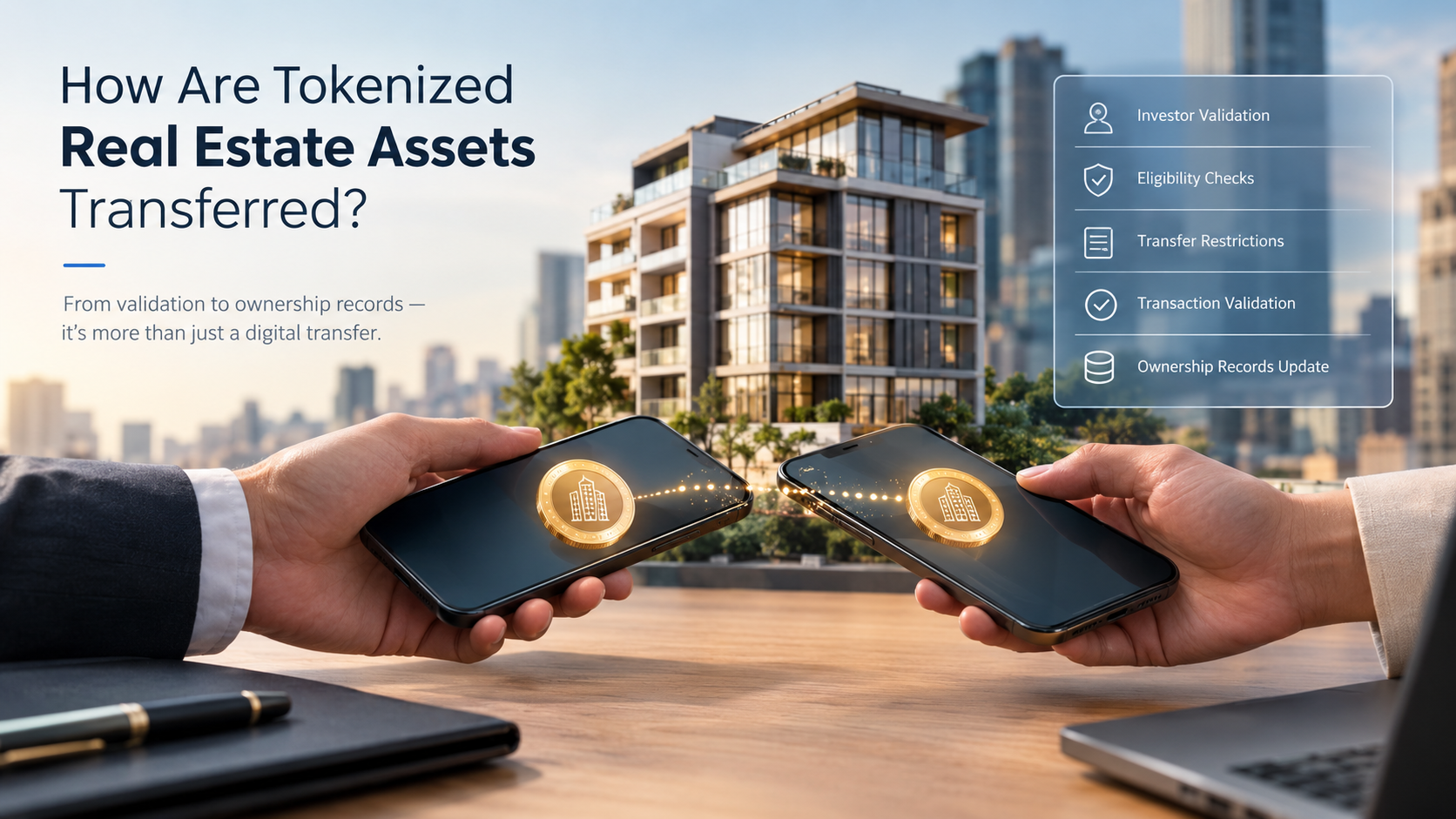
Buying or transferring a tokenized real estate interest is not necessarily the same as sending cryptocurrency from one wallet to another.
A token may be recorded on a blockchain, but the interest it represents remains subject to the legal and contractual framework established around the underlying property. That means a transfer can involve investor authorization, eligibility checks, transfer restrictions, transaction validation, and updates to ownership records.
This is an important part of real estate tokenization because issuing the tokens is only the beginning. Once investors hold them, the structure also needs a way to manage permitted transfers while keeping the digital records aligned with the underlying investor interests.
What Happens When a Tokenized Real Estate Interest Is Transferred?
Consider a commercial property held through a dedicated legal structure. Defined investor interests in that structure are represented by digital tokens.
Investor A owns 5,000 tokens and wants to transfer 1,000 of them to Investor B. In a conventional cryptocurrency transaction, the basic action might be described as:
Wallet A → Wallet B
A tokenized real estate transfer can be considerably more involved:
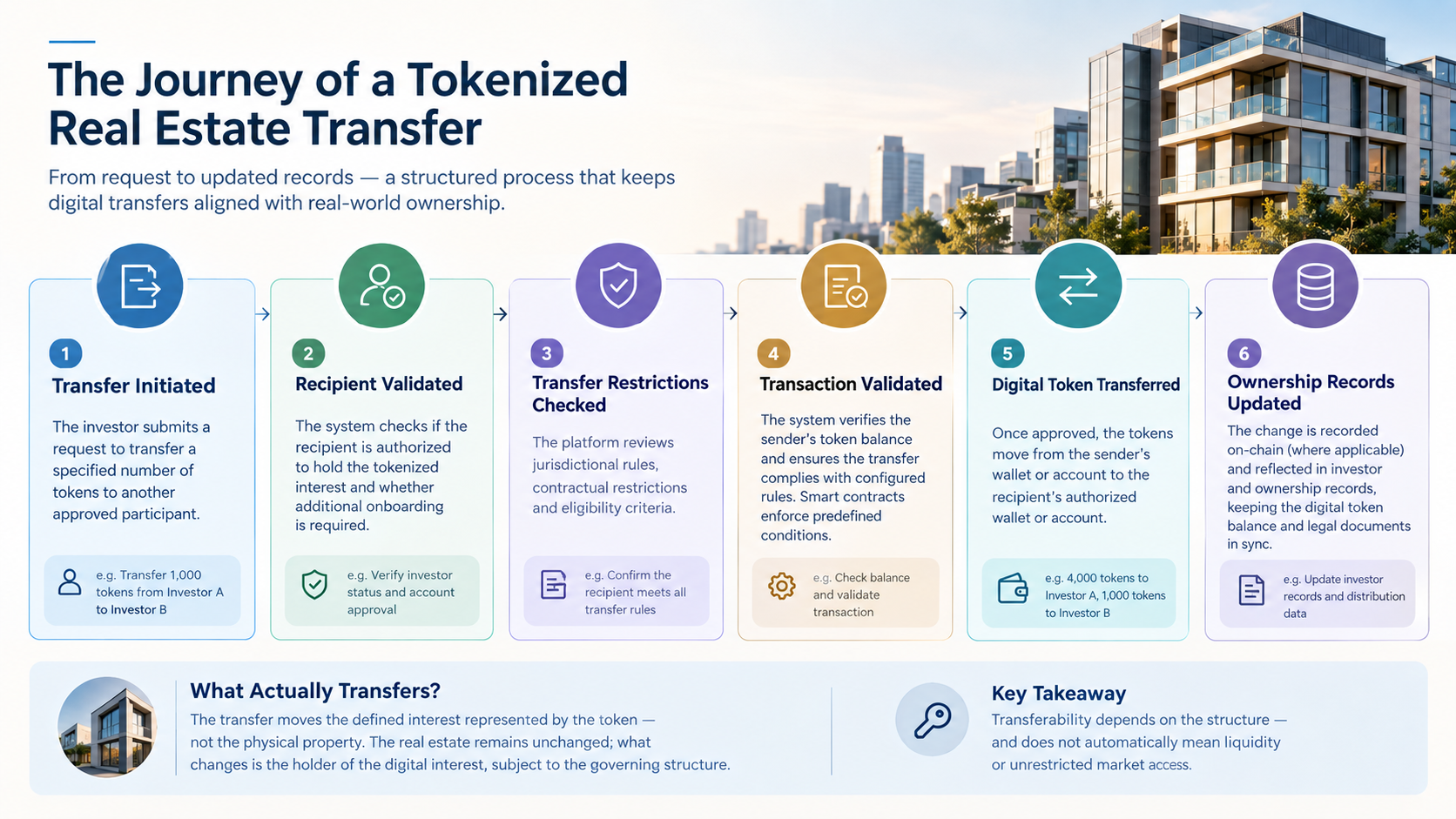
Transfer request → investor validation → eligibility checks → transfer-rule validation → token transfer → ownership-record update
The exact process varies according to the structure, but the important point is that the digital movement of tokens operates within a set of rules.
The receiving investor may need to be authorized. The tokens may have restrictions on who can hold them. The transaction may also need to satisfy conditions established by the governing agreements.
Step 1: The Transfer Is Initiated
The process begins when an investor wants to transfer some or all of their tokenized interest. For example, Investor A may decide to transfer 1,000 of their 5,000 tokens to another approved participant. The system first identifies:
- the tokens being transferred;
- the current holder
- the intended recipient
- the quantity involved
At this stage, the transaction is simply a proposed transfer. It does not necessarily mean the transfer can proceed immediately.
Step 2: The Recipient Is Validated
Tokenized real estate may operate within a controlled investor environment. Depending on the transaction, the recipient may need to satisfy specific requirements before receiving the tokens. The system can therefore check whether the prospective recipient is already authorized or whether additional onboarding is required.
For example, Investor B may have an account but may not yet be approved to hold the particular tokenized interest. In that situation, the transfer cannot simply be completed because the token exists on a blockchain. The recipient’s status needs to be considered within the rules governing the asset. This is one of the key differences between a regulated tokenized interest and an unrestricted digital token.
Step 3: Transfer Restrictions Are Checked
A tokenized real estate interest can have restrictions governing its transfer. These restrictions may relate to:
- who is permitted to hold the interest
- applicable jurisdictional requirements
- contractual restrictions
- investor eligibility
- holding periods where applicable
- other conditions established for the transaction
Suppose Investor A wants to transfer tokens to an individual who does not meet the requirements for participating in the structure. The transfer infrastructure can prevent the transaction from proceeding where the relevant rules require it. This means that tokenization does not automatically make real estate interests freely transferable.
Step 4: The Transaction Is Validated
Once the relevant conditions have been satisfied, the proposed transfer can be validated. The system may verify that Investor A actually holds the stated number of tokens and that the transaction complies with the rules configured for the tokenized interest.
If Investor A owns 5,000 tokens and attempts to transfer 6,000, for example, the transaction cannot be valid simply because a transfer was requested. Likewise, if the recipient is not permitted to hold the tokens, the transfer may be rejected.
Smart contracts can potentially enforce predefined transfer rules where the tokenization structure uses them for this purpose. However, the technology only enforces the rules incorporated into the system. It does not independently determine the legal meaning of the underlying real estate interest.
Step 5: The Digital Token Is Transferred
After the required conditions have been satisfied, the tokenized interest can move from the sender’s authorized wallet or account to the recipient’s authorized wallet or account. Using the earlier example:
Investor A: 5,000 tokens → 4,000 tokens
Investor B: 0 tokens → 1,000 tokens
The transaction creates a digital record of the change. Depending on the architecture, the transaction may be recorded on-chain and linked to the relevant investor records and operational systems.
Step 6: Ownership Records Are Updated
The process does not end with the blockchain transaction. Relevant investor and ownership records need to reflect the new position. If Investor A previously held 5,000 tokens and now holds 4,000, the records associated with the tokenized structure should reflect that change.
This matters because investor rights, distributions, reporting, and future transfers may depend on accurate records. The digital token balance and the legal documentation therefore need to remain aligned with the structure governing the property.
What Does the Transfer Actually Transfer?
This returns to an important distinction in tokenized real estate. Suppose a token represents a defined interest in a property-holding entity. When the token is transferred, the investor is transferring the interest represented by that token under the governing structure.
The physical property itself does not move.
The office building, apartment complex, warehouse, or other real estate remains exactly where it is. What changes is the holder of the defined digital interest. This is why describing tokenized real estate as simply “selling part of a building on the blockchain” can create confusion. The digital transfer and the underlying property ownership are related through the legal structure, but they are not the same event.
Can Anyone Buy or Sell Tokenized Real Estate?
Not necessarily. The fact that an asset has been tokenized does not mean that anyone with a compatible crypto wallet can automatically purchase or receive its tokens. A tokenized real estate structure may restrict participation based on its legal, regulatory, and contractual framework.
For example, an issuer could establish a tokenized interest intended only for approved investors. A prospective buyer may therefore need to complete the required onboarding process before becoming eligible to receive the tokens.
The transfer mechanism needs to reflect those restrictions. This is particularly important when designing infrastructure for institutional real estate assets, where ownership records and investor permissions can be central to the operating model.
Does Transferability Mean Liquidity?
No.
Transferability and liquidity are related, but they are not interchangeable.
A tokenized real estate interest may technically be transferable between eligible participants without having an active secondary market. For example, imagine that 100,000 tokens represent defined interests associated with a commercial property. The tokens may be capable of being transferred under the relevant rules, but there may be very few willing buyers at a particular time.
The existence of a digital transfer mechanism does not create demand. Liquidity depends on factors such as:
- market participation
- buyer and seller demand
- transfer restrictions
- market infrastructure
- availability of an appropriate secondary market
How Transfers Interact With Property-Related Distributions?
Transfers can also affect the administration of property-related cash flows. Suppose Investor A transfers 1,000 tokens to Investor B midway through an applicable distribution period. The tokenized structure needs to determine how the relevant investor entitlement is handled according to its governing rules. This is where accurate ownership records become particularly important.
The system may need to establish who held the relevant interest at the applicable point in time and ensure that the corresponding records and administrative processes reflect the transfer. Digital infrastructure can potentially automate parts of these workflows, but the underlying rules still come from the structure established for the property and investor interests.
Conclusion
Transferring a tokenized real estate interest is more than moving a digital asset between two wallets. A properly structured transfer can involve recipient authorization, eligibility checks, transfer restrictions, transaction validation, digital settlement, and updates to investor records.
The physical property remains unchanged. What moves is the defined interest represented by the token, subject to the legal and contractual framework governing the transaction. That distinction is central to understanding tokenized real estate.
Tokenization can make certain real estate interests digitally transferable, but transferability depends on the structure – and transferability alone does not guarantee liquidity or unrestricted market access.


No Comment