


IPTV has grown into a major digital entertainment model, but behind the smooth streaming experience lies one of the most complicated parts of the entire business: payments. Many operators underestimate how difficult it is to manage transactions at scale, especially across countries, currencies, and risk environments. Understanding IPTV Payment Processing is not just a technical requirement – it directly affects revenue stability, customer retention, and long-term growth.
At a surface level, IPTV payments seem simple: a user subscribes, pays, and gains access instantly. But in practice, businesses quickly discover that payment success rates, fraud risk, chargebacks, and compliance rules can make or break the operation.
Why IPTV Payments Are Classified as High-Risk ?
One of the first realities IPTV businesses face is that most banks and traditional payment processors classify the industry as “high-risk.” This label comes from historical patterns, not assumptions. IPTV businesses tend to experience:
- Higher chargeback ratios
- Frequent subscription disputes
- Cross-border payment inconsistencies
- Unclear content licensing boundaries in some regions
Because of this classification, many mainstream payment providers either refuse IPTV merchants or impose restrictions such as delayed payouts, frozen reserves, or sudden account terminations. This instability is one of the biggest reasons IPTV operators struggle to scale sustainably.
Global Payments Create Hidden Operational Pressure
Unlike localized businesses, IPTV platforms often serve customers across multiple continents. This introduces a major challenge: Payment Fragmentation.
A single IPTV service may need to support:
- Credit and debit cards in North America
- SEPA transfers in Europe
- Mobile wallets in Asia
- Region-specific alternative payment methods
Each method comes with different approval rates, fees, and settlement times. Without proper infrastructure, businesses face inconsistent payment performance across regions.
This is where platforms like Paybito help reduce friction by centralizing and optimizing multi-region payment flows, allowing businesses to manage transactions more efficiently.
Chargebacks: The Most Underrated Threat
Chargebacks are one of the most damaging aspects of IPTV payment processing. A chargeback happens when a customer disputes a transaction through their bank, forcing a reversal.
While chargebacks exist in all industries, IPTV services are especially vulnerable due to:
- Subscription misunderstandings
- Shared or unauthorized account usage
- Lack of clear billing descriptors
- Customer disputes over recurring payments
The impact goes beyond losing a single transaction. High chargeback ratios can:
- Increase processing fees
- Trigger penalties from payment processors
- Damage merchant credibility
- Lead to account shutdowns
Many IPTV businesses only react after chargebacks become a serious issue, instead of proactively designing systems to prevent them.
Fraud Risks in Digital Subscription Models
Fraud is another major challenge in IPTV payment ecosystems. Since services are delivered digitally and instantly, they become attractive targets for stolen credit card usage and automated fraud attempts.
Common fraud patterns include:
- Card testing attacks (small unauthorized transactions)
- Use of stolen payment credentials
- Automated bot sign-ups
- High-volume suspicious transaction bursts
Without strong fraud prevention systems, IPTV businesses risk not only financial losses but also being flagged by acquiring banks. Over time, this can severely limit access to payment infrastructure.
Effective IPTV payment systems typically rely on:
- Real-time fraud scoring
- Device and IP tracking
- Velocity checks on transactions
- AI-based anomaly detection
These tools are essential for maintaining long-term payment stability.
Subscription Billing and Revenue Leakage
Most IPTV businesses rely heavily on Recurring Subscription Models. However, recurring billing introduces its own set of hidden challenges.
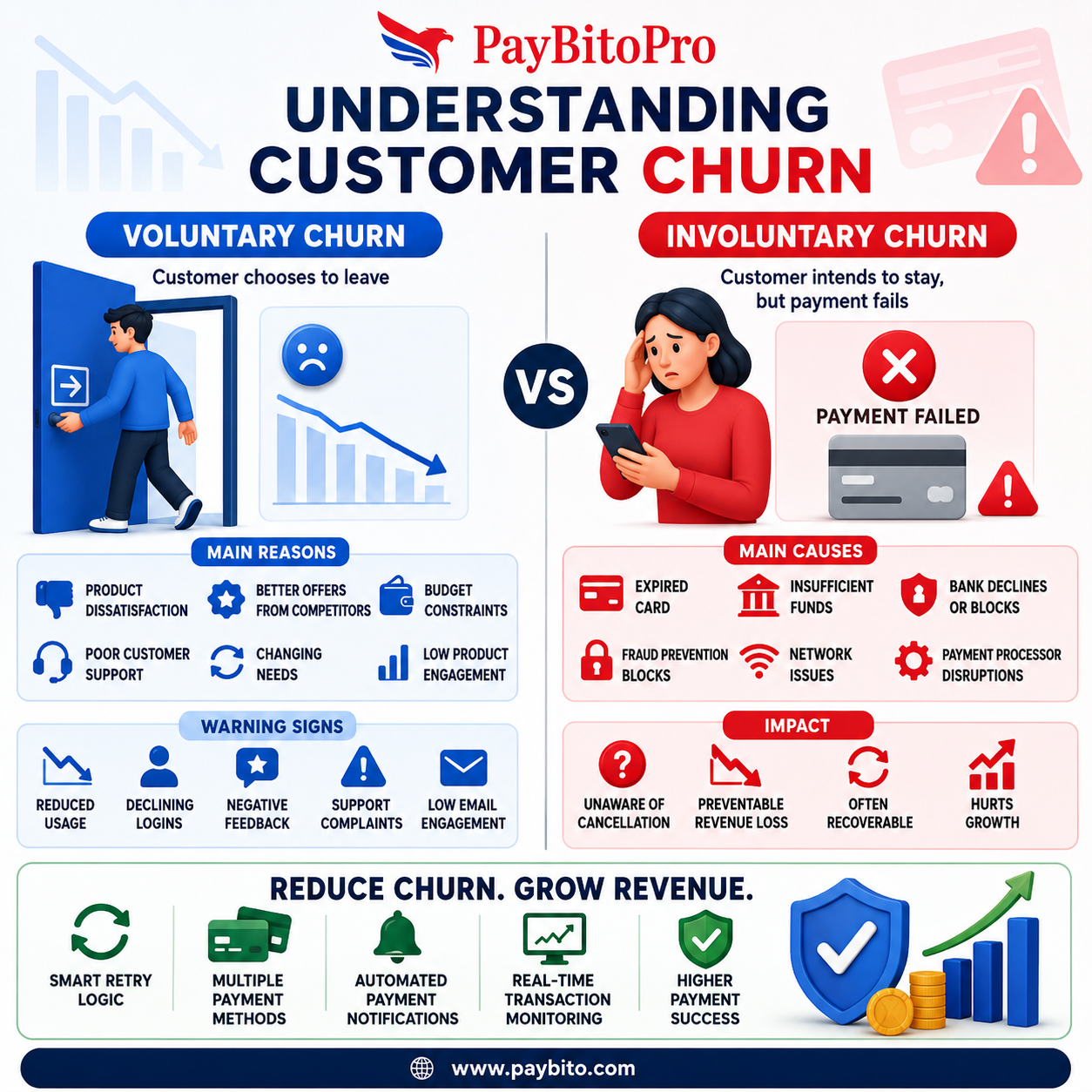
A major issue is involuntary churn – customers losing access not because they want to cancel, but because payments fail. Common causes include:
- Expired cards
- Insufficient funds
- Bank declines on recurring charges
- Gateway routing failures
Even a small percentage of failed renewals can create significant revenue leakage at scale.
To reduce this, businesses need:
- Smart retry mechanisms
- Automated card update systems
- Multi-gateway redundancy
- Clear billing communication to users
Without these systems, IPTV platforms often struggle to maintain predictable monthly revenue.
Compliance and Regulatory Complexity
Another layer of difficulty comes from global compliance requirements. IPTV businesses often operate across jurisdictions with different rules around taxation, digital services, and financial reporting.
Payment processors must also comply with:
- KYC (Know Your Customer) regulations
- AML (Anti-Money Laundering) policies
- Regional financial laws and restrictions
Failure to comply can lead to:
- Frozen merchant accounts
- Delayed payouts
- Legal risks in certain regions
- Permanent loss of payment access
This is why many IPTV operators eventually move toward specialized infrastructure designed to handle high-risk compliance requirements more effectively.
What Most IPTV Businesses Get Wrong
Despite all these challenges, the biggest mistake IPTV operators make is treating payment processing as a one-time technical setup rather than a core business strategy.
Common mistakes include:
- Relying on a single payment provider
- Ignoring chargeback prevention until it becomes critical
- Not optimizing checkout experience for global users
- Failing to monitor transaction performance
- Overlooking recurring billing optimization
These issues often don’t cause immediate failure, but they gradually reduce revenue efficiency and increase operational risk over time.
Building a More Stable Payment Strategy
A strong IPTV payment strategy is not about finding a single perfect processor – it is about building resilience into the system. This includes diversification, monitoring, and optimization across the entire payment lifecycle.
Businesses that scale successfully typically:
- Use multiple payment routing options
- Monitor approval and decline rates continuously
- Invest in fraud prevention from day 1
- Optimize subscription billing systems
- Localize payment methods for global audiences
Specialized systems designed for IPTV and high-risk industries can significantly improve stability by reducing friction and improving transaction success rates.
To understand how structured infrastructure supports this ecosystem, you can explore IPTV payment solutions for a deeper view of how payment challenges are addressed in practice.
Final Thoughts
IPTV payment processing is far more complex than it appears on the surface. It is shaped by risk classification, global transaction behavior, fraud exposure, subscription mechanics, and strict compliance requirements.
Businesses that fail to recognize this complexity often face unstable revenue and unpredictable payment disruptions. On the other hand, operators who treat payments as a strategic pillar – not just a backend function, are far better positioned to scale, retain customers, and build long-term stability in a highly competitive industry.



No Comment