


The rise of stablecoins has reshaped the way enterprises think about digital payments, treasury operations, and cross-border transactions. Once viewed primarily as a cryptocurrency innovation, stablecoins are now becoming an essential component of enterprise financial infrastructure. Banks, fintechs, payment providers, and multinational corporations are increasingly integrating stablecoin technology to reduce settlement delays, lower transaction costs, and unlock real-time global payments.
For organizations exploring this transition, understanding the underlying infrastructure is just as important as understanding the stablecoin itself. Whether you’re building a payment platform, modernizing treasury operations, or launching blockchain-powered financial services, choosing the right technology partner can significantly impact implementation success. Organizations looking to learn more about enterprise blockchain infrastructure, implementation strategies, and industry best practices can explore the blockchain resources and consulting insights available from HashCash Consultants.
What Is Stablecoin Infrastructure?
Stablecoin infrastructure refers to the complete technological and operational framework that enables stablecoins to be issued, transferred, managed, secured, and redeemed. While a stablecoin appears simple to the end user – the ecosystem supporting it is highly sophisticated.
Unlike traditional payment networks that depend on multiple intermediaries, stablecoin infrastructure operates on blockchain networks using programmable smart contracts and decentralized validation. This enables near-instant settlement, improved transparency, and greater operational efficiency.
A robust stablecoin infrastructure generally consists of:
- Blockchain networks
- Smart contracts
- Digital wallets
- Custody solutions
- Payment gateways
- Compliance and KYC/AML systems
- Liquidity providers
- APIs for enterprise integration
- Monitoring and security tools
Together, these components allow enterprises to move value digitally while maintaining security, regulatory compliance, and operational reliability.
Why Enterprises Are Investing in Stablecoin Infrastructure
Traditional international payment systems often involve multiple correspondent banks, settlement delays, foreign exchange fees, and limited operating hours. Stablecoins solve many of these inefficiencies.
Businesses today are leveraging stablecoin infrastructure to:
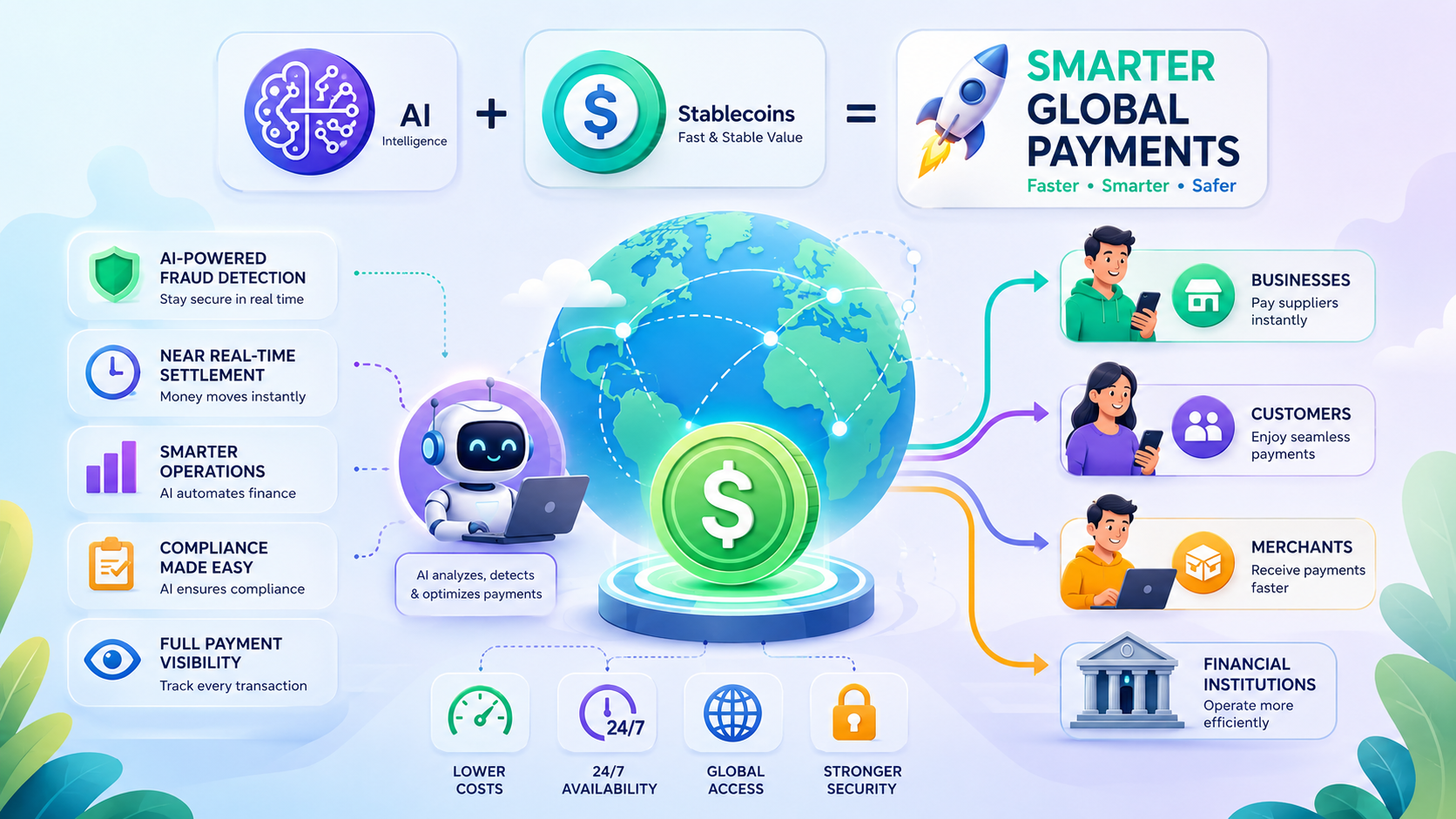
- Enable 24/7 global payments
- Reduce cross-border settlement costs
- Improve treasury management
- Streamline supplier payments
- Automate recurring payments using smart contracts
- Enhance liquidity management
- Support tokenized financial products
For multinational enterprises operating across several markets, stablecoins eliminate many friction points associated with legacy payment rails.
Core Components of Stablecoin Infrastructure
1. Blockchain Network
Every stablecoin operates on a blockchain. Popular enterprise-supported networks include Ethereum, Solana, Polygon, Avalanche, and other permissioned or public blockchains.
The blockchain records every transaction permanently, providing transparency, immutability, and security while removing dependence on centralized clearing institutions.
2. Stablecoin Issuance System
Issuers maintain the mechanism responsible for creating and redeeming stablecoins.
This system manages:
- Reserve verification
- Minting new tokens
- Burning redeemed tokens
- Asset backing
- Supply management
For regulated stablecoins, reserve management is one of the most critical infrastructure components.
3. Smart Contracts
Smart contracts automate business logic.
Instead of relying on manual processing, enterprises can automate:
- Payment releases
- Escrow settlements
- Subscription billing
- Payroll
- Trade finance
- Treasury operations
Automation reduces operational costs while minimizing human error.
4. Wallet Infrastructure
Wallets serve as the interface between users and blockchain networks.
Enterprise wallet infrastructure often includes:
- Multi-signature authorization
- Hardware security modules (HSMs)
- Institutional custody
- Role-based permissions
- Recovery mechanisms
Security remains the highest priority because wallets control digital assets directly.
5. Compliance Layer
Unlike early crypto ecosystems, enterprise stablecoin infrastructure must meet regulatory standards.
Compliance systems typically integrate:
- KYC verification
- AML monitoring
- Transaction screening
- Sanction checks
- Risk scoring
- Audit reporting
These capabilities allow enterprises to remain compliant while operating across jurisdictions.
6. APIs and Enterprise Integration
Stablecoin infrastructure becomes truly valuable when connected with existing business systems.
Modern APIs integrate with:
- ERP software
- Accounting platforms
- Banking systems
- Treasury software
- CRM platforms
- Payment processors
This allows businesses to adopt blockchain without replacing their entire technology stack.
Benefits of Stablecoin Infrastructure for Enterprises
Faster Settlement
Traditional international wire transfers may require one to five business days. Stablecoin transactions can settle within minutes, depending on the blockchain network.
This accelerates cash flow and improves operational efficiency.
Lower Transaction Costs
Removing intermediaries significantly reduces payment processing expenses, especially for international transactions.
For enterprises making frequent global payments, these savings become substantial over time.
24/7 Availability
Unlike traditional banking systems, blockchain networks never close.
Payments can be processed during weekends, holidays, and outside banking hours, enabling truly global commerce.
Increased Transparency
Every blockchain transaction creates an immutable audit trail.
Finance teams gain real-time visibility into payment status, treasury balances, and settlement history without relying on multiple reporting systems.
Programmable Finance
Stablecoins introduce programmable money.
Businesses can automate payment workflows based on predefined conditions, improving efficiency across procurement, payroll, lending, and supply chain finance.
Enterprise Use Cases
Stablecoin infrastructure is rapidly expanding across industries.
Some of the most common enterprise applications include:
Cross-border payments
Companies reduce international settlement time while lowering foreign exchange costs.
Corporate treasury management
Businesses move liquidity between global entities instantly.
B2B settlements
Suppliers receive faster payments without intermediary banking delays.
Payroll
Global workforces can receive near-instant salary payments using compliant digital wallets.
Merchant payments
Retailers increasingly accept stablecoins to reduce payment processing costs while expanding payment options.
Capital markets
Stablecoins are becoming settlement assets for tokenized securities and digital financial products.
Challenges Enterprises Must Address
Despite the advantages, implementing stablecoin infrastructure requires careful planning.
Common challenges include:
- Regulatory uncertainty across jurisdictions
- Blockchain scalability
- Cybersecurity risks
- Wallet management
- Smart contract auditing
- Liquidity availability
- Integration with legacy systems
These challenges make enterprise architecture and implementation strategy critical for long-term success.
Choosing the Right Infrastructure Partner
Technology alone does not guarantee success. Enterprises require experienced partners capable of designing scalable, secure, and compliant blockchain ecosystems.
An ideal infrastructure partner should provide:
- Blockchain consulting
- Solution architecture
- Smart contract development
- Enterprise integration
- Security audits
- Compliance support
- Infrastructure deployment
- Long-term maintenance
Companies that combine blockchain expertise with enterprise software experience are better positioned to deliver production-ready stablecoin ecosystems rather than experimental pilots.
Organizations evaluating blockchain adoption should consider reviewing implementation frameworks, enterprise use cases, and industry best practices before selecting a technology partner.
Final Thoughts
Stablecoin infrastructure is far more than the technology behind digital currencies—it is the foundation for a faster, more transparent, and more efficient financial ecosystem. From blockchain networks and smart contracts to compliance systems and enterprise integrations, every layer contributes to enabling secure, real-time value transfer.
For enterprises, adopting stablecoin infrastructure is not merely about embracing innovation. It is about building resilient financial systems capable of supporting global operations, reducing costs, improving liquidity, and preparing for the next generation of digital commerce. As adoption accelerates across industries, organizations that develop a well-planned infrastructure strategy today will be better equipped to lead tomorrow’s digital economy.
Frequently Asked Questions
1. What is stablecoin infrastructure?
Stablecoin infrastructure is the collection of technologies, blockchain networks, wallets, smart contracts, compliance tools, and APIs that enable stablecoins to be issued, transferred, stored, and managed securely within enterprise environments.
2. Why are enterprises adopting stablecoin infrastructure?
Enterprises use stablecoin infrastructure to enable faster global payments, reduce transaction costs, improve treasury management, automate financial processes, and support 24/7 settlement.
3. Is stablecoin infrastructure secure?
Yes, when implemented correctly. Enterprise-grade infrastructure includes encryption, institutional custody, multi-signature wallets, smart contract audits, and comprehensive compliance systems to ensure security and regulatory adherence.
4. Which industries benefit most from stablecoin infrastructure?
Financial services, fintech, e-commerce, supply chain, international trade, payment processing, and multinational corporations benefit significantly from stablecoin infrastructure due to their need for efficient, cross-border financial operations.


No Comment